
- 25/06/2026
- Dr. Raviram
- 0 Comments
- Piles
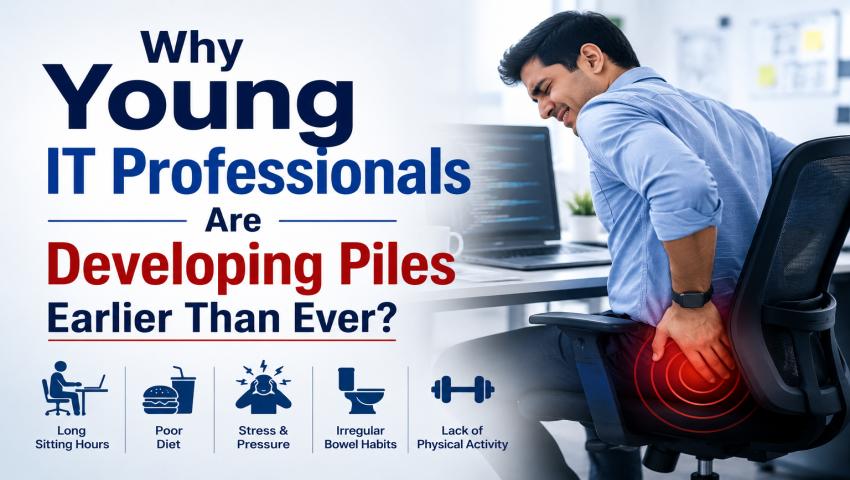
Why Young IT Professionals Are Developing Piles Earlier Than Ever?
Are you an IT professional who spends 8 to 10 hours sitting at a desk every day? Do you often ignore that uncomfortable feeling “down there” and push through your work deadlines? If yes, you are not alone.
Piles, also known as haemorrhoids, is no longer just a problem for older people. Today, more and more young IT professionals in India are being diagnosed with piles. And the numbers are rising every year.
This is a health issue that directly connects to the modern desk-bound lifestyle. Long working hours, poor diet, low physical activity, and constant stress are creating the perfect conditions for piles to develop early.
Dr. Raviram S., a leading Piles Specialist in Thrissur, has shared this blog to help young IT professionals understand why piles are becoming so common today. He has explained the real causes, early warning signs, and simple ways to prevent it — so you can take action before it gets worse.
What Are Piles? A Simple Explanation
Piles are swollen veins in and around the rectum and anus. They can be internal (inside the rectum) or external (under the skin around the anus).
Common symptoms include:
- Bleeding during bowel movements
- Pain or discomfort while sitting
- Itching or irritation around the anal area
- A feeling of incomplete evacuation
Many people feel embarrassed to talk about it. But piles is a very common and treatable medical condition. Ignoring it only makes things worse over time.
Why Are Young IT Professionals Getting Piles Earlier?
1. Sitting for Too Long Without Breaks:
IT professionals typically sit for 8 to 12 hours a day. Prolonged sitting puts constant pressure on the veins in the rectal region. Over time, this pressure causes those veins to swell and become painful.
Unlike older generations who had more physically active jobs, today’s tech workforce is almost entirely sedentary. The body was not designed to sit still for so many hours. And the rectal veins pay the price.
2. Poor Eating Habits and Low Fibre Diet:
Deadlines, late-night work sessions, and irregular meal timings have completely changed how young professionals eat. Most IT workers survive on junk food, instant noodles, fast food, caffeine, and sugary snacks. These foods are very low in dietary fibre. Fibre is essential for soft, regular bowel movements. Without enough fibre, stools become hard and dry. Straining during bowel movements is one of the most direct causes of piles.
A diet rich in vegetables, fruits, whole grains, and legumes can significantly reduce the risk of developing piles.
3. Dehydration — A Silent Trigger:
Many IT professionals forget to drink enough water throughout the day. They are too focused on their screens. Dehydration makes stools hard and difficult to pass. This forces straining during bowel movements, which puts direct pressure on the rectal veins. Even mild, chronic dehydration over months can contribute to piles.
The simple fix? Drink at least 8 to 10 glasses of water every day. Keep a water bottle on your work desk as a reminder.
4. Chronic Stress and Mental Pressure:
The IT industry is well known for its high-pressure environment. Tight deadlines, client demands, performance reviews, night shifts — stress is constant. Chronic stress affects the digestive system significantly. It can cause irregular bowel habits, constipation, and inflammation in the gut. All of these increase the risk of developing piles.
Stress also leads to poor lifestyle choices like skipping meals, eating junk food, and sleeping late — all of which further aggravate the problem.
5. Zero Physical Activity During the Week:
Most young IT professionals have very little time or energy for exercise during the working week. They sit all day at work, then sit again on the commute home, and finally sit again while watching TV or using the phone. Regular physical activity keeps the digestive system healthy and helps blood circulation throughout the body. Without movement, blood pools in the lower body, especially around the rectal veins.
Even a 30-minute walk every day can make a significant difference to digestive health.
6. Ignoring Early Warning Signs:
Young professionals tend to dismiss early symptoms of piles. They think it will go away on its own. Or they feel too embarrassed to see a doctor. But piles does not go away without proper treatment in most cases. Ignoring it allows the condition to progress from Grade 1 to Grade 3 or Grade 4, where symptoms become much more severe and treatment becomes more complex.
Early diagnosis and early treatment always lead to better outcomes. Do not wait.
7. Irregular Sleep Patterns and Night Shifts:
Night shifts and irregular sleep patterns disrupt the body’s natural circadian rhythm. This affects digestion and bowel habits significantly.
Many IT professionals who work night shifts report irregular bowel movements, constipation, and bloating. These issues directly increase the risk of developing piles at a young age.
Warning Signs You Should Never Ignore:
If you notice any of the following, please consult a specialist immediately:
- Bright red blood in the toilet bowl or on toilet paper
- Pain or burning sensation during or after bowel movements
- A lump near the anus that is painful or tender
- Mucus discharge after passing stools
- Persistent itching around the anal region
- Feeling that the bowel has not fully emptied
These are clear signs that you need medical attention. Do not self-medicate with over-the-counter creams alone. A proper evaluation by a specialist is essential.
Simple Lifestyle Changes to Prevent Piles:
Here are some practical steps every IT professional should follow:
- Take a break every hour. Stand up, stretch, and walk for 5 minutes.
- Eat a high-fibre diet. Include fruits, vegetables, dal, whole wheat roti, and oats in your meals.
- Drink enough water. Aim for 8 to 10 glasses of water daily.
- Exercise regularly. Even a 20 to 30 minute walk each day helps your digestive system.
- Do not delay going to the toilet. Holding it in increases rectal pressure.
- Avoid straining. Do not spend too long on the toilet.
- Manage stress. Practice yoga, meditation, or any activity that helps you relax.
- Avoid spicy and processed foods. They irritate the digestive system and worsen piles.
These small changes can prevent piles from developing in the first place. They can also reduce symptoms significantly if you already have mild piles.
When to See a Doctor?
If lifestyle changes do not help within a few weeks, or if your symptoms are moderate to severe, it is time to see a specialist. Do not feel embarrassed. Piles is a medical condition, just like any other. A qualified doctor can assess your condition and recommend the right treatment for your specific case.
Modern treatment options for piles today are minimally invasive, nearly painless, and allow you to return to work quickly. Advanced laser procedures in particular are highly effective and have very short recovery times.
Meet Dr. Raviram S. — Piles Specialist in Thrissur:

15,000 +
Happy Patients

16 +
Years of Experience

4,000 +
successful surgeries

99%
Success Ratio
If you are looking for the best Piles Treatment in Thrissur, look no further than Dr. Raviram S., a highly experienced Piles Specialist in Thrissur and the Founder & Director of Thrissur Piles Clinic.
Dr. Raviram S. holds an MCh in Surgical Gastroenterology from Government Medical College, Thiruvananthapuram, and has over 16 years of specialised experience in treating piles, fissures, fistulas, and pilonidal sinus.
As a trusted Proctologist in Thrissur, Dr. Raviram S. has successfully completed over 4,000 advanced proctology procedures and has helped more than 15,000 patients find lasting relief — with a remarkable 99% success rate.
He is a recipient of the Prime Time 2024 Global Healthcare Icon Award for Healthcare Excellence in Laser Proctology and the Excellence Award in Laser Proctology from the Global Healthcare & Wellness Awards, New Delhi.
At Thrissur Piles Clinic, every patient receives personalised, compassionate care using the latest minimally invasive and laser-based techniques. The clinic is open 24 hours, making it easy for working professionals to book appointments at a time that suits them.
Contact Details:
📍 West Fort, Thrissur, Kerala 680004
📞 9961001199
📧 drraviram12@gmail.com
Final Thoughts:
Piles is a growing health problem among young IT professionals in India. The combination of a sedentary lifestyle, poor diet, chronic stress, and long working hours makes this demographic especially vulnerable. The good news is that piles is completely preventable and highly treatable when caught early. Small daily habits can protect your health in the long run. If you or someone you know is experiencing symptoms of piles, do not delay. Early consultation with a specialist can save you from months of pain and discomfort.
Book your consultation today at Thrissur Piles Clinic and get the expert care you deserve.