
- 23/10/2026
- Dr. Raviram
- 0 Comments
- Fissure
Can Diarrhea Cause or Worsen an Anal Fissure?
You had a bad stomach for two days. Now, every time you pass stool, there is a sharp, cutting pain, and sometimes a streak of bright red blood on the tissue. You think, “My stool was loose, not hard. So why does my poop feel sharp?”
Most people believe a fissure happens only because of constipation. So when the pain starts after loose motions, it is confusing. The answer surprises many patients who visit Dr. Raviram S., a proctologist with 16 years of experience at Thrissur Piles Clinic.
So, can diarrhea cause an anal fissure? Yes, it can, and it can also make an existing one much worse. In this blog, we explain what causes fissures in the anus, how diarrhea and anal fissure are linked, and what you can do about it. If you are searching for fissure treatment in Thrissur, this guide will help you understand when home care is enough and when you need a specialist.
What Is an Anal Fissure?
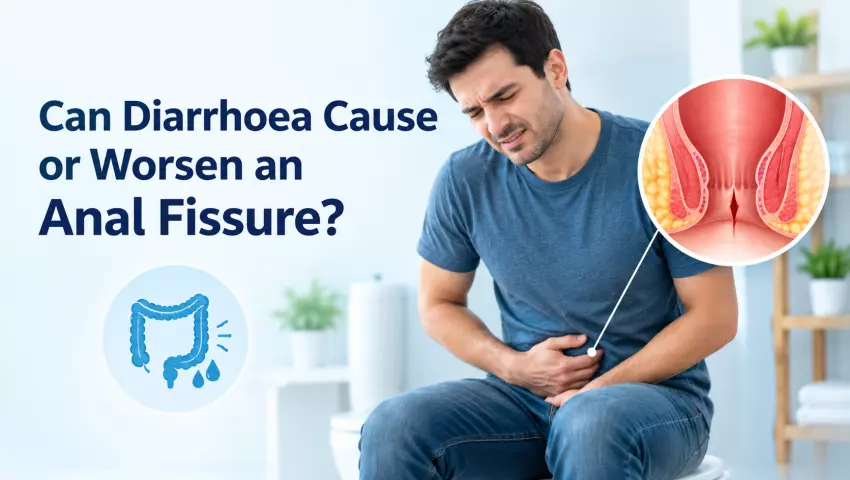
An anal fissure is a small tear in the thin, delicate skin lining the anal canal. Think of a crack on your lip, but in a place used many times a day. That is why it hurts so much and heals slowly.
An acute fissure is a recent tear that usually heals within a few weeks. If it stays beyond 6 to 8 weeks, it is called a chronic fissure.
Common anal fissure symptoms and signs of anal fissure include:
- Sharp pain during or after passing stool
- Bright red blood on tissue paper or the toilet bowl
- A painful fissure that feels like a muscle spasm
Can diarrhea Cause an Anal Fissure?
Many patients ask us, “can diarrhea cause anal fissure?” or “can diarrhea cause an anal fissure even if there is no hard stool?” Yes, it can. Hard stools and straining are the usual causes of fissure. But loose motion and fissure problems are also closely connected, and a doctor at a Thrissur piles clinic sees this every week.
The skin inside the anal canal is very thin and has no protection against acid, moisture or friction. Normal stool passes without bothering it, but diarrhea changes that.
Here is the reason for fissures in people with diarrhea:
- Digestive acids and enzymes: Loose stool carries more acid and enzymes. These burn the delicate anal lining, and the skin may crack.
- Frequent bowel movements: Going to the toilet 6 to 10 times a day means the area never gets a chance to rest or heal.
- Repeated wiping: Dry tissue paper rubs the already sore skin and creates small tears.
- Constant moisture: Damp skin becomes weak and breaks down easily.
- Sudden urgency and force: Watery stool passes with pressure, and the anal muscles tighten and spasm.
Once the skin tears, the pain makes the anal muscle tighten, which reduces blood flow to the area. Less blood means slower healing, and the next loose stool hits the same spot again.
This is why many people notice fissure pain after loose motion or even fissure bleeding after diarrhea. If you are wondering why fissures happen without constipation, this is usually the answer.
How diarrhea Worsens an Existing Fissure?
Suppose you already have a small fissure. Normally, it would heal in a few weeks with a little care. But when diarrhea comes in, it can turn into a bigger problem in these ways:
- No time to heal: Every loose stool re-injures the same tear. A fresh wound needs a few quiet days to close, and frequent motions take that chance away.
- Constant moisture and irritation: The wound stays wet and inflamed. Acid in the loose stool and repeated wiping keep the area raw and painful.
- Muscle spasm: The anal sphincter tightens with pain, which reduces blood flow to the area. Poor blood supply means slow healing.
- Risk of infection: A wet, open wound can get infected, which may cause swelling, pus or throbbing pain.
- Fear of the toilet: Many people start holding back stool because of the pain. This leads to hard stool later, which tears the fissure again.
You may notice the signs yourself. The pain lasts longer after each motion, the bleeding returns even after it had stopped, or you feel a burning, itchy discomfort throughout the day.
Over time, an acute fissure can become chronic. A chronic fissure may develop a small skin tag or a hard edge, and it is much harder to heal with home care alone. A proctologist in Thrissur often sees patients who ignored their fissure after a stomach infection, and it turned into a long-term problem.
Common Causes of diarrhea Linked to Fissures:
Apart from the usual fissure causes, repeated loose stools make anal fissure after diarrhea more likely. Common triggers are:
- Food poisoning and stomach infections
- Irritable bowel syndrome (IBS)
- Crohn’s disease and other bowel conditions
- Overuse of laxatives or long antibiotic courses
- Lactose or gluten intolerance
Treating the cause of loose stools anal fissure is as important as treating the tear itself.
Treatment and Home Care:
Modern anal fissure treatment ranges from simple home care to laser procedures. Many people ask how to treat anal fissure and how to heal a fissure fast. Is fissure curable? Yes, in most cases it is. And can fissures heal on their own? Many small ones do, if the diarrhea is controlled and the area is kept clean and calm. How long do anal fissures take to heal? Usually 4 to 6 weeks.
Fissure home remedy and care tips:
- Sitz bath: Sit in warm water for 10 to 15 minutes, 2 to 3 times a day. It relaxes the muscles and improves blood flow.
- Gentle cleaning: Use plain water or a soft, moist wipe instead of dry tissue.
- Barrier cream or petroleum jelly: It protects the skin from irritation.
- Hydration: Drink ORS, coconut water and plenty of fluids.
- Simple food: Eat curd rice, banana and khichdi. Avoid spicy and oily food until your stool is normal.
- Medicines: Doctors may prescribe a muscle-relaxing ointment or a numbing cream. Do not self-medicate.
These home remedies for anal fissure help, but they have limits. If you are asking how to cure a fissure permanently, treat the cause, keep stools soft and regular, and see a specialist if it keeps returning.
For chronic or recurring cases, doctors may advise Botox injection, sphincterotomy or laser treatment. Laser is minimally invasive and recovery is usually faster. If you want the Best Laser Fissure Treatment in Thrissur, consult an experienced proctologist like Dr. Raviram S. at Thrissur Piles Clinic, who will examine you first, because not every fissure needs surgery.
When to See a Doctor in thrissur?
Please do not wait if you notice any of these:
- Pain or bleeding continues beyond 2 to 3 weeks
- diarrhea lasts more than 2 to 3 days
- Heavy bleeding, or blood mixed with stool
- Fever, pus or swelling around the anus
- Unexplained weight loss
A proctologist in Thrissur can quickly find the exact problem. If home care has not worked, getting checked early can save you weeks of pain and stop a minor tear from becoming chronic. A trusted Thrissur piles clinic will also tell you honestly whether you need the Best Laser Fissure Treatment in Thrissur or just medicines and diet changes.
Conclusion:
So, can diarrhea cause an anal fissure? Yes. Frequent, acidic and watery stools can create a tear, and they can stop an existing fissure from healing. Controlling diarrhea, keeping the area clean, drinking enough fluids and starting care early make a big difference.
If your pain is not settling, visit a proctologist in Thrissur or a nearby Thrissur piles clinic and get the right guidance on fissure treatment in Thrissur. With timely care, you can get back to normal life without fear of every toilet visit.
Don’t ignore the pain. Book your consultation with Dr. Raviram S. at Thrissur Piles Clinic today.
📞 Call: 099610 01199