
- 16/10/2026
- Dr. Raviram
- 0 Comments
- Fissure
Why Does My Fissure Hurt More After a Bowel Movement?
You finally finish your bowel movement and think the worst is over. Then it starts: a burning, throbbing ache that stays long after you leave the toilet.
If this sounds familiar, you are not alone. Many patients tell Dr. Raviram S., a proctologist with 16 years of experience at Thrissur Piles Clinic, said that fissure pain after bowel movement is actually worse than the pain during it. Some even start avoiding the toilet. That one habit, as we will see, makes everything worse. So why does it hurt when I poop, and why does it hurt even more afterwards? There is a clear reason, and it is not what most people think.
In this blog, we explain what is happening in your body, what you can do at home, and when it is time to look for Fissure Treatment in Thrissur. Read till the end, because the second reason is the one most people miss.
What Is an Anal Fissure?
An anal fissure, also known as fissure in ano, is a small tear in the thin skin lining the anal canal. It usually happens after passing a hard stool or straining too much.
Common fissure symptoms include:
- Sharp, cutting pain while pooping
- A little bright red blood on the tissue paper
- Itching or irritation around the anus
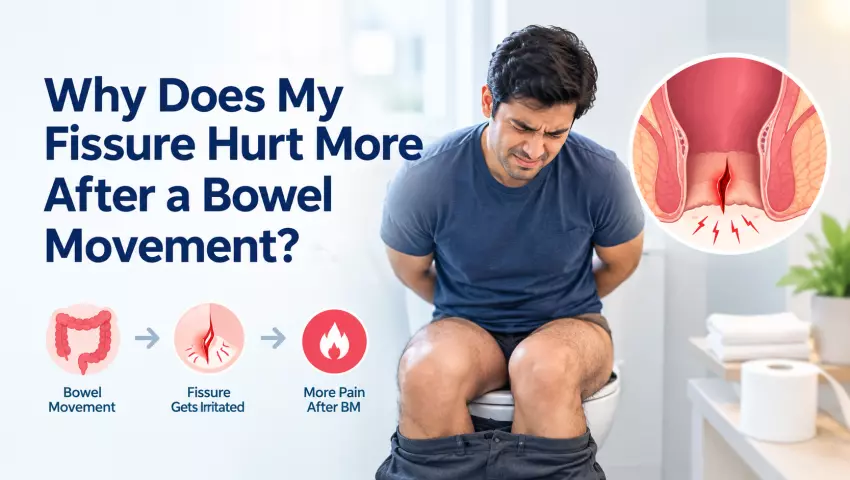
Why Fissure Pain Gets Worse After a Bowel Movement?
If you have been wondering why does my fissure hurt after pooping, or why does anal fissure hurt more after a bowel movement, the answer lies in three things working together:
- Re-injury of the tear: The skin inside the anus is very thin and has many pain nerves. When stool passes, it stretches the tear again and irritates the raw skin. This is why anal fissure pain starts the moment you pass stool, and it is worse when the stool is hard or dry.
- Sphincter spasm: Once the stool is out, the muscle around the anus (the internal sphincter) tightens up on its own. You cannot control this muscle, so it does not relax easily. This spasm causes the burning, throbbing pain after passing stool that most fissure patients describe. It can last from a few minutes to several hours.
- Poor blood flow: The tight muscle presses on the small blood vessels around the tear. Less blood reaches the area, so the fissure heals slowly and can tear open again with the next stool. That is why fissure bleeding after bowel movement keeps coming back.
In short, the pain during a bowel movement comes from the tear, but the pain after passing stool mostly comes from the tight muscle. This is also why just applying something on the surface does not always help, and the muscle needs to relax too.
Why the Pain Can Last Hours After Passing Stool?
“How long does fissure pain last?” is one of the most common questions we hear. In a fresh fissure, the pain usually settles within a few minutes to an hour. But fissure pain lasting hours after bowel movement is quite common when the fissure is chronic or the spasm is strong.
The pain during stool pass may be short, but the sphincter muscle keeps tightening long after you leave the toilet. This tight muscle also reduces blood flow, so the tear stays raw and heals slowly.
Some people also notice fissure pain at night. When you lie down to rest, there is nothing to distract you, so the throbbing feels stronger.
If the pain lasts for hours after every bowel movement, or continues for more than two to three weeks, it is a sign that the fissure needs a doctor’s check-up.
The Pain Cycle: Fear, Constipation, and Re-Injury
This is the part that traps many people:
- Pain makes you afraid of the toilet.
- You hold back the stool.
- The stool becomes harder and drier.
- Hard stool tears the fissure again.
Then the cycle repeats. This is why bowel movements hurt more with each passing day. It also stretches the fissure heal time. A fresh fissure may heal in four to six weeks, but one that keeps tearing can become chronic.
So, can fissures heal on their own? Early ones often can, with the right care. How long do anal fissures take to heal depends on how well you break this cycle. For older fissures, a proctologist in Thrissur can guide you on the next step.
Common Triggers That Make Fissure Pain Worse:
Knowing the causes of fissures helps you avoid them. What causes fissures in the anus? The usual culprits are:
- Constipation and straining
- Hard, dry stools
- Repeated diarrhoea
- Sitting for long on the toilet
- Low fibre intake and too little water
- Harsh or scented wipes
A good diet for anal fissure includes fruits, vegetables, oats, dal, and whole grains, along with plenty of water. Aim for around 25 to 30 grams of fibre daily.
Home Remedies to Relieve Pain After a Bowel Movement:
Home remedies for anal fissure work best for fresh tears. If you are wondering how to treat anal fissure in the early stage, or how to stop fissure pain after pooping, start with these steps:
- Sitz bath for anal fissure: Sit in warm water for 10 to 15 minutes, two or three times a day, especially after a bowel movement. This relaxes the muscle and is one of the simplest ways to soothe pain in anus.
- Fibre and stool softeners: The best stool softener for anal fissure differs from person to person. Isabgol or lactulose are commonly advised, but please check with your doctor first.
- Cream for anal fissure and fissure ointment: Doctor-prescribed ointments can relax the muscle or numb the area. Please avoid using any cream on your own.
- Gentle cleaning: Wash with plain water and pat dry.
- Better toilet habits: Do not hold the urge, and use a small footstool for a better sitting position.
Each fissure home remedy gives some anal fissure pain relief, and together they show how to heal a fissure fast, but only if you follow them regularly. If these steps do not help, options like the Best Laser Fissure Treatment in Thrissur can be discussed with your doctor.
When to See a Doctor in Thrissur?
Please do not wait if:
- Pain continues beyond two to three weeks
- Bleeding is heavy or keeps repeating
- The pain is so severe that you avoid passing stool
- You have fever, swelling, or pus near the anus
A chronic fissure often needs more than medicines. A proctologist in Thrissur can examine you and suggest the right anal fissure treatment. Today, many patients prefer laser treatment because it is minimally invasive, causes less discomfort, and usually has a faster recovery than conventional surgery.
At Thrissur Piles Clinic, Dr. Raviram S. first examines each patient carefully and recommends a procedure only when it is truly needed. An early consultation can save you months of pain.
Conclusion:
Fissure pain gets worse after a bowel movement mainly because of two things: re-injury of the tear and the sphincter spasm that follows. Add fear and constipation, and the cycle continues.
The good news is that small changes in diet, water intake, and toilet habits can break this cycle for most fresh fissures. If the pain stays, please do not ignore it. Consult a proctologist in Thrissur like Dr. Raviram S. at Thrissur Piles Clinic. Whether you need medicines or the Best Laser Fissure Treatment in Thrissur, the right guidance can help you get back to a normal, pain-free routine.
Don’t let fissure pain control your day. Book your consultation with Dr. Raviram S. at Thrissur Piles Clinic today and take the first step towards lasting relief.