
- 13/07/2026
- Dr. Raviram
- 0 Comments
- Fistula
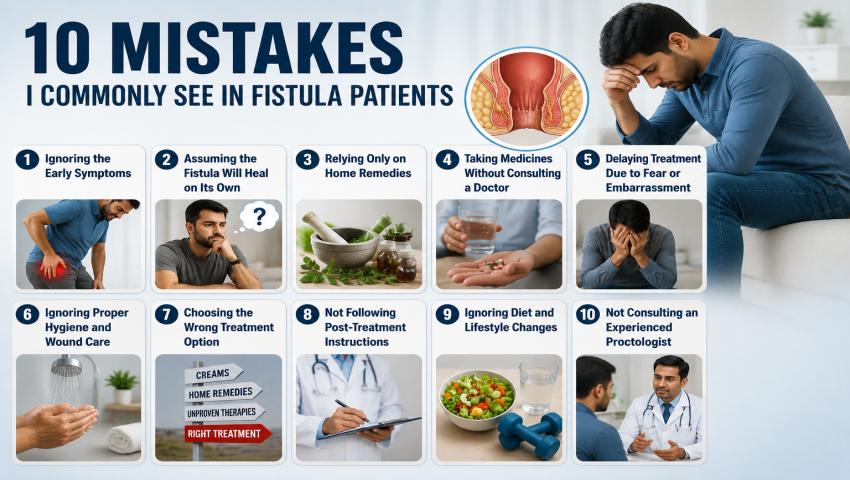
10 Mistakes I Commonly See in Fistula Patients
An anal fistula is more than just a painful condition — and one of the most common fistula patient mistakes is ignoring it in its early stages. Yet, many people unknowingly make mistakes that allow the infection to worsen. Some ignore the early warning signs, while others depend on home remedies or self-medication. These small decisions often lead to repeated infections, delayed healing, and more complicated treatment.
With over 16 years of experience, Dr. Raviram S., Proctologist in Thrissur, has treated hundreds of patients with anorectal conditions in, Thrissur. One common pattern he observes is that many patients are unaware of what they should and should not do after developing an anal fistula. By understanding these common mistakes, you can seek timely Fistula Treatment in Thrissur, avoid unnecessary complications, and recover faster.
Whether you’ve recently noticed symptoms or have been struggling with a recurring problem, this guide will help you make informed decisions and understand why early medical care is the key to successful recovery.
What Is an Anal Fistula?
An anal fistula is a small tunnel that forms between the anal canal and the skin around the anus. It usually develops after an anal abscess fails to heal completely. The remaining infection creates a passage that causes continuous or recurrent drainage.
Common anal fistula symptoms include:
- Pain around the anus
- Swelling or a lump near the anal opening
- Pus or blood discharge
- Bad-smelling drainage
- Pain during bowel movements
- Recurrent boils or abscesses
Without timely Anal Fistula Treatment, the infection may continue to spread, increasing the risk of a recurrent fistula and other complications.
1. Ignoring the Early Symptoms:
Many patients ignore the initial signs because they believe the pain or swelling will disappear on its own. Unfortunately, the infection usually continues to progress beneath the skin.
Early anal fistula symptoms may include:
- Mild pain while sitting
- Swelling near the anus
- Occasional fistula discharge
- Recurrent boils
- Mild bleeding
Ignoring these symptoms can delay fistula diagnosis and increase the chances of infection spreading deeper into the tissues.
Doctor’s Note:
Many patients who seek treatment during the early stages recover more comfortably than those who wait until the infection becomes severe. Early diagnosis often means simpler treatment and a lower risk of recurrence.
2. Assuming the Fistula Will Heal on Its Own:
This is probably the most common misconception.
Unlike a simple wound, an anal fistula rarely closes naturally because the infected tract remains inside the body. Even if the pain or discharge temporarily reduces, the infection usually returns after a few weeks or months.
Delaying treatment may lead to:
- Persistent infection
- Larger fistula tract
- Recurrent abscesses
- More complicated Anal Fistula Surgery
Important to Know:
An anal fistula is a chronic condition in most cases. Waiting for it to heal naturally usually delays recovery and increases the likelihood of future complications.
3. Relying Only on Home Remedies:
Many patients try warm sitz baths, herbal oils, turmeric, or internet remedies before consulting a doctor. While these methods may reduce irritation or provide temporary comfort, they cannot remove the infected fistula tract. Home remedies should only be considered supportive care—not a replacement for professional Anal Fistula Treatment.
Ignoring medical treatment may result in:
- Persistent infection
- Continued discharge
- Delayed healing
- Increased discomfort
Quick Fact:
A warm sitz bath can help reduce discomfort, but it cannot cure an anal fistula. Only proper medical evaluation can determine the right treatment plan.
4. Taking Medicines Without Consulting a Doctor:
Many people purchase antibiotics or painkillers without medical advice whenever the infection flares up. Although antibiotics may temporarily reduce inflammation, they do not eliminate the fistula tract. Once the medicines are stopped, the infection often returns.
Self-medication may also:
- Mask important symptoms
- Delay proper fistula diagnosis
- Increase antibiotic resistance
- Postpone the right treatment
A specialist will identify the exact cause of your symptoms and recommend the most appropriate treatment instead of simply treating the infection temporarily.
Expert Tip:
Pain relief doesn’t always mean healing. If you continue experiencing swelling, drainage, or repeated infections despite taking medicines, consult a Proctologist in Thrissur instead of repeatedly taking antibiotics on your own.
5. Delaying Treatment Due to Fear or Embarrassment:
Many people hesitate to seek medical help because they feel embarrassed discussing anal health problems. Others fear that treatment will be painful or require a long hospital stay. Unfortunately, delaying treatment gives the infection more time to spread and can make the fistula more complex.
The longer an untreated fistula remains, the greater the chances of repeated infections, severe pain, and the formation of additional fistula tracts. Seeking early Fistula Treatment in Thrissur can help prevent unnecessary complications and improve recovery.
Doctor’s Note:
One of the biggest regrets I hear from patients is, “I wish I had come earlier.” Early consultation often means simpler treatment and a smoother recovery.
6. Ignoring Proper Hygiene and Wound Care:
Maintaining proper hygiene is essential for managing an anal fistula. Poor hygiene can increase irritation and allow bacteria to multiply around the infected area.
Simple habits that can make a difference include:
- Washing the area gently after bowel movements
- Keeping the area dry
- Changing dressings regularly if advised
- Wearing loose, breathable cotton clothing
Good hygiene supports fistula healing and reduces the chances of secondary infection.
Recovery Tip:
Good hygiene alone cannot cure a fistula, but it plays an important role in preventing infections and supporting faster recovery after treatment.
7. Choosing the Wrong Treatment Option:
This is one of the more serious fistula patient mistakes because every anal fistula is different. Some are simple, while others are complex and require specialised treatment. Choosing treatment based only on cost or advice from non-specialists can lead to incomplete healing and recurrence.
An experienced Fistula Doctor will first perform a proper examination and recommend the most suitable option based on the fistula’s location and severity.
Depending on the case, treatment may include:
- Conventional Fistula Surgery
- Laser Fistula Treatment
- Other minimally invasive fistula treatment techniques
The goal is always to remove the infection while preserving normal bowel function.
Quick Fact:
Laser treatment is not suitable for every patient. The best treatment depends on the type, depth, and complexity of the fistula, which is why a proper evaluation by a specialist is essential.
8. Not Following Post-Treatment Instructions:
Successful treatment doesn’t end after surgery. Recovery largely depends on how well patients follow their doctor’s advice.
Common mistakes after treatment include:
- Skipping follow-up visits
- Stopping medicines too early
- Ignoring wound care instructions
- Returning to strenuous activities before complete healing
These habits can slow fistula recovery and increase the risk of infection returning.
Expert Tip:
The first few weeks after treatment are crucial. Following your doctor’s instructions carefully can significantly improve healing and reduce the chances of recurrence.
9. Ignoring Diet and Lifestyle Changes:
Many patients underestimate how much their daily habits affect recovery. A diet low in fibre can cause constipation, making bowel movements painful and placing extra pressure on the healing area.
For better recovery:
- Eat fibre-rich foods like fruits, vegetables, and whole grains.
- Drink 2–3 litres of water daily.
- Avoid prolonged sitting whenever possible.
- Stay physically active with light walking.
- Follow your doctor’s dietary recommendations.
Healthy bowel habits support faster healing and make recovery much more comfortable.
Important to Remember:
A healthy lifestyle cannot cure an anal fistula, but it can reduce discomfort, prevent constipation, and improve recovery after treatment.
10. Not Consulting an Experienced Proctologist:
Many patients spend months visiting different clinics before consulting a specialist. During this time, the fistula often becomes more complicated.
An experienced Proctologist in Thrissur can accurately diagnose the condition and recommend the most effective Anal Fistula Treatment based on your individual case.
With more than 16 years of experience, Dr. Raviram S. has helped numerous patients receive timely diagnosis and advanced treatment in Thrissur.
Early specialist consultation often means:
- Accurate diagnosis
- Personalised treatment plan
- Better recovery
- Lower risk of recurrence
- Faster return to normal life
Doctor’s Note:
Every fistula is different. Treating all fistulas the same can lead to poor outcomes. A detailed examination helps determine the safest and most effective treatment for each patient.
Quick Summary: Common Mistakes Fistula Patients Make
Mistake
- Ignoring early symptoms
- Assuming the fistula will heal on its own
- Relying only on home remedies
- Taking medicines without consulting a doctor
- Delaying treatment due to fear or embarrassment
- Ignoring hygiene and wound care
- Choosing the wrong treatment option
- Not following post-treatment instructions
- Ignoring diet and lifestyle changes
- Not consulting an experienced proctologist
Why It's a Problem?
- Delays diagnosis and allows the infection to worsen
- Most anal fistulas require professional treatment
- Temporary relief but no permanent cure
- Can mask symptoms and delay proper diagnosis
- Increases the risk of infection and complications
- Slows healing and increases infection risk
- May lead to incomplete healing or recurrence
- Delays recovery and affects long-term outcomes
- Poor bowel habits can slow healing
- May result in delayed diagnosis and inappropriate treatment
Understanding these mistakes is the first step towards better recovery. If you recognise any of these habits, don’t panic. Making the right decisions now and seeking timely medical care can significantly improve your chances of a smooth recovery while reducing the risk of a recurrent fistula.
When Should You See a Proctologist in Thrissur?
Many patients wait until the pain becomes unbearable before consulting a doctor. However, early medical attention can prevent repeated infections and reduce the risk of complications.
You should consult a Proctologist in Thrissur if you experience:
- Persistent pain around the anus
- Swelling or a lump near the anal opening
- Continuous pus or blood discharge
- Recurrent anal abscesses
- Pain during bowel movements
- Fever along with anal pain
- Symptoms that keep returning despite taking medicines
These symptoms may indicate an anal fistula that requires proper fistula diagnosis and treatment. Ignoring them can increase the chances of infection spreading or developing a recurrent fistula.
If you are experiencing any of these warning signs, seeking Fistula Treatment in Thrissur at the earliest can help you avoid unnecessary discomfort and improve your recovery.
Conclusion:
An anal fistula is a condition that should never be ignored. While many patients unknowingly make mistakes such as delaying treatment, relying on home remedies, or avoiding specialist care, these decisions can lead to prolonged pain, repeated infections, and more complex treatment later.
Recognising the early anal fistula symptoms, seeking a timely fistula diagnosis, and following the right treatment plan can make a significant difference in your recovery. Modern treatment options, including Laser Fistula Treatment, have made recovery more comfortable for many suitable patients when performed after a proper evaluation.
If you’re looking for expert Fistula Treatment in Thrissur, consult Dr. Raviram S., Proctologist in Thrissur. With over 16 years of experience in treating anorectal conditions, Dr. Raviram S. focuses on accurate diagnosis, personalised treatment, and advanced surgical techniques to help patients recover safely and return to their normal lives with confidence.
Frequently Asked Questions (FAQs):
A fibre-rich diet with fruits, vegetables, and whole grains, along with adequate water intake, helps prevent constipation and eases bowel movements. However, diet alone cannot heal a fistula — it only supports comfort and recovery alongside proper medical treatment.
Alcohol itself doesn’t directly cause an anal fistula, but excessive alcohol consumption can worsen inflammation and digestive issues, which may indirectly affect healing and recovery in patients already dealing with a fistula.
While some patients delay treatment for months or years, living with an untreated fistula usually means ongoing pain, discharge, and a higher risk of recurrent infections.
Yes, a fistula can reopen or recur, especially if the infection wasn’t completely treated, post-treatment care instructions weren’t followed, or the underlying tract wasn’t fully addressed during treatment. Regular follow-ups help reduce this risk.
Recurrence symptoms are similar to the original fistula — renewed pain, swelling, discharge, or a new opening near the surgical site. Noticing these early and consulting your doctor promptly can prevent complications.