
- 17/07/2026
- Dr. Raviram
- 0 Comments
- Fissure, Fistula, Piles
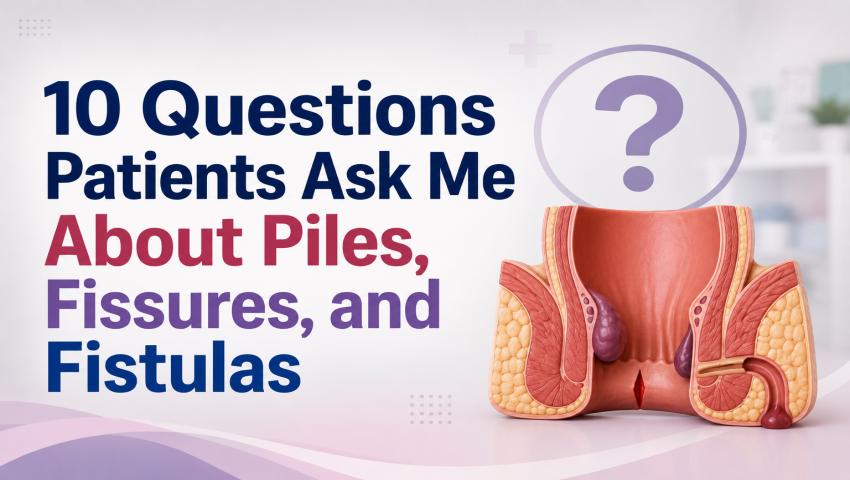
10 Questions Patients Ask Me About Piles, Fissures, and Fistulas
Blood in the toilet bowl. A burning pain that won’t go away even after the bathroom visit is over. A small opening near the anus that keeps oozing and just won’t heal. If any of this sounds familiar, chances are you’ve already spent a few sleepless nights Googling symptoms at 2 AM, wondering if it’s “just piles” or something more serious.
I’m Dr Raviram S., a Proctologist in Thrissur, and in my 16 years of practice, I’ve noticed one thing again and again — most patients walk into my clinic confused, not because their condition is rare, but because piles, fissures, and fistulas are so often mixed up with one another. They affect the same area, share a few overlapping symptoms, but are, in fact, three very different conditions with different causes, different treatments, and different outcomes.
In this blog, I’m answering the 10 questions I get asked most often at Thrissur Piles Clinic in plain, simple language, without the medical jargon. By the end, you’ll know exactly which condition might be troubling you, and more importantly, what to do about it.
1. What's the Difference Between Piles, Fissures, and Fistulas?
Let’s start with the basics, because this is where most of the confusion begins.
- Piles (Haemorrhoids): Swollen, inflamed blood vessels inside or around the rectum and anus. They often cause painless bleeding and a feeling of a lump.
- Fissure: A small tear or crack in the lining of the anus, usually caused by passing hard stools. Fissures are known for sharp, burning pain during and after bowel movements.
- Fistula: An abnormal tunnel that forms between the anal canal and the skin near the anus, usually after an infection or abscess. It typically causes persistent discharge, irritation, and sometimes recurring swelling.
Once patients understand this basic difference, half their worry is already gone.
2. Which Is More Dangerous — Piles, Fissure, or Fistula?
This is one of the most searched questions, and understandably so — nobody wants to underestimate a health issue.
In my experience, fistulas tend to be the most complex condition of the three. They rarely heal on their own, almost always need surgical treatment, and, if left untreated for long, can lead to repeated infections or abscess formation. Piles and fissures, on the other hand, are usually manageable with timely treatment and lifestyle changes, and they respond well when caught early.
That said, “dangerous” doesn’t always mean “life-threatening.” All three conditions, when ignored for too long, can affect your quality of life significantly — so early consultation matters more than trying to rank which one is worse. This is exactly why, when patients come in seeking fistula treatment in Thrissur, I always start with a thorough examination first, rather than jumping straight to a diagnosis based on symptoms alone.
3. Which Is More Painful — Piles, Fissure, or Fistula?
Pain is subjective, but based on what patients describe to me daily:
- Fissures are usually the most acutely painful — patients often describe them as “passing glass” or a burning sensation that can last for hours after passing stool.
- Piles are more often associated with discomfort, itching, and a feeling of fullness rather than sharp pain — unless they become thrombosed (clotted), in which case the pain can be sudden and intense.
- Fistulas cause a duller, more persistent discomfort, along with irritation from constant discharge.
If you’re dealing with sharp, tearing pain specifically after passing stool, a fissure is usually the first thing I check for. In fact, this sharp pain is the most common reason patients search for fissure treatment in Thrissur in the first place — it’s simply too uncomfortable to ignore for long.
4. What Causes Piles, Fissures, and Fistulas?
While these conditions are different, many of the underlying causes overlap:
- Chronic constipation and excessive straining
- Low-fibre diet and low water intake
- Prolonged sitting (especially relevant for desk-job professionals)
- Pregnancy and childbirth (a common cause of piles)
- Chronic diarrhoea (can lead to fissures)
- Untreated anal abscess (the most common cause of fistulas)
Interestingly, most of these causes are lifestyle-related, which is why prevention plays such a big role in managing all three conditions.
5. Can Piles Turn Into a Fistula?
This is a question I get asked a lot, and it’s a fair one, since both conditions are in the same area.
As a Proctologist, I like to clear this up early because a lot of patients come in worried about the wrong thing. The honest answer: piles do not directly turn into a fistula. They have different origins — piles are caused by swollen blood vessels, while fistulas typically develop after an anal abscess (a pus-filled infection) doesn’t heal properly and forms a tunnel to the skin.
However, if piles are left untreated and become severely inflamed or infected, they can sometimes create conditions that lead to complications — so while it’s not a direct transformation, ignoring any anorectal issue for too long is never a good idea.
6. Can Piles and Fissures Be Treated Without Surgery? (Home Remedies That Actually Work)
Good news — in their early stages, piles and fissures often respond well to non-surgical treatment. Some remedies I genuinely recommend to my patients include:
- Increasing fibre intake — fruits, vegetables, whole grains
- Drinking enough water throughout the day
- Sitz baths (sitting in warm water for 10-15 minutes) to ease pain and swelling
- Topical ointments prescribed for fissures to relax the anal muscle and promote healing.
- Avoiding straining and not delaying the urge to pass stool
If symptoms persist beyond 2-3 weeks despite these measures, it’s time to see a doctor rather than continuing home treatment indefinitely. I often tell patients looking for piles treatment in Thrissur the same thing — home remedies work best as a first step, not a permanent substitute for medical advice, especially if bleeding or pain keeps returning.
A quick but important note: fistulas almost always require surgical treatment. There is no reliable home remedy that closes an abnormal tunnel — so please don’t delay a proper consultation if you suspect a fistula. Most patients who come to me for fistula treatment in Thrissur have already tried home care for weeks before realising it wasn’t going to work, which only delays proper healing.
7. Does a Fistula Always Cause Pus or Discharge?
Not always, but it’s one of the most common and telling symptoms. A fistula typically presents as:
- Persistent or intermittent discharge (pus, sometimes blood-stained) from an opening near the anus
- Skin irritation or itching around that opening
- Recurring swelling or a small boil-like lump that keeps coming back
- Occasional fever if there’s an active infection
If you notice an opening near your anus that keeps discharging, heals, then discharges again, this cyclical pattern is a strong indicator of a fistula, which needs proper evaluation, usually including an examination and sometimes imaging like an MRI or ultrasound. When patients describe this exact pattern to me, Dr Raviram S, I usually already have a strong idea of what we’re dealing with even before the examination begins.
8. When Is Surgery Necessary for Piles, Fissure, or Fistula — and Will It Affect Bowel Control?
Surgery becomes necessary when:
- Piles are advanced (grade 3 or 4), don’t respond to non-surgical treatment, or cause repeated bleeding/prolapse.
- Fissures become chronic (lasting more than 6-8 weeks) despite medical treatment.
- Fistulas are diagnosed — surgery is almost always the definitive treatment, since fistulas don’t close on their own
One concern I hear very often is: “Doctor, will surgery affect my bowel control?” This fear is completely understandable, but with modern, sphincter-sparing surgical techniques, the risk of affecting continence is minimised significantly.
The exact procedure depends on the complexity of the case — which is why a proper diagnosis before surgery is so important. Whether you’re exploring piles treatment in Thrissur or considering fissure treatment in Thrissur, this is the one question I’d encourage you to ask your doctor directly before agreeing to any procedure.
9. Do Piles, Fissures, and Fistulas Come Back After Treatment?
Recurrence is possible, but it varies by condition:
- Piles can recur, especially if the underlying cause (constipation, straining, sedentary lifestyle) isn’t addressed
- Fissures may recur if bowel habits don’t improve after healing.
- Fistulas have a slightly higher chance of recurrence, particularly in complex cases involving multiple tracts, which is why choosing the right surgical approach and following post-operative care matters so much.
The good news is that maintaining good bowel habits and diet after treatment significantly reduces the chances of any of these coming back.
10. How Can I Prevent Piles, Fissures, and Fistulas?
Prevention really comes down to a few consistent habits:
- Eat a fibre-rich diet — include fruits, vegetables, and whole grains daily.
- Stay well-hydrated
- Avoid prolonged sitting — take short breaks if you have a desk job.
- Don’t strain or delay the urge to pass stool.
- Exercise regularly to keep your digestive system active.
- Treat any anal infection or abscess promptly, rather than waiting for it to resolve on its own
Small, consistent changes in daily habits go a long way in preventing all three conditions.
Final Thoughts:
Piles, fissures, and fistulas are far more common than most people realise, but the silence and embarrassment around these conditions often lead to delayed treatment and unnecessary suffering. Please don’t try to self-diagnose based on Google images or forum posts — every case is different, and what looks like piles could actually be a fissure or vice versa.
If you’ve been experiencing any of these symptoms, don’t wait it out. A timely consultation can save you months of discomfort. Feel free to book a consultation with me at Thrissur Piles Clinic, Thrissur, and I’ll help you get an accurate diagnosis and the right treatment plan for your condition.
Frequently Asked Questions:
Piles are swollen veins, a fissure is a tear in the anal skin, and a fistula is an infected tunnel near the anus — each needs different treatment.
Piles come from straining, constipation, or prolonged sitting; fistulas usually follow an unhealed anal abscess.
Neither — both are treatable if caught early, but ignoring either can lead to complications.
Piles = swollen vessels, fissure = a tear, fistula = an infected tunnel — all different conditions, all need proper diagnosis.
Fissures are usually the most painful due to muscle spasm; piles cause more bleeding than sharp pain.