
- 01/08/2026
- Dr. Raviram
- 0 Comments
- Pilonidal Sinus
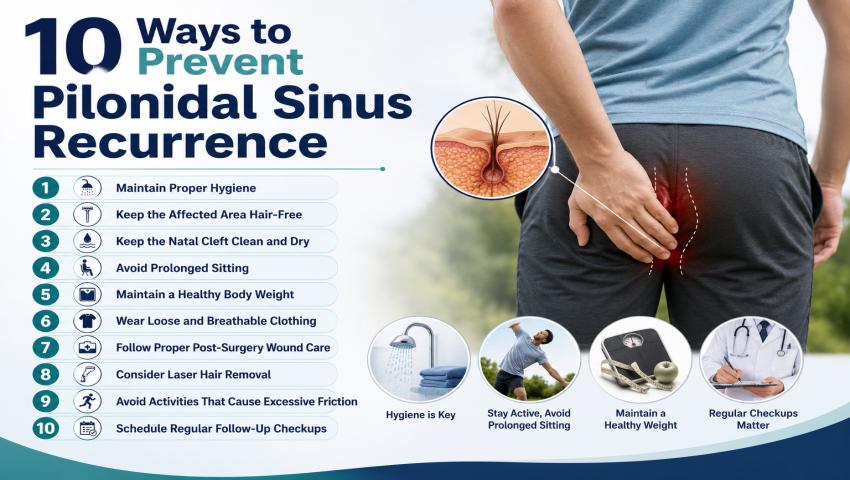
10 Ways to Prevent Pilonidal Sinus Recurrence
You finally underwent treatment for your pilonidal sinus; the pain is gone, and life is getting back to normal. But then a question starts bothering you—can it come back? Unfortunately, the answer is yes. Pilonidal sinus recurrence is more common than many people realize, especially if proper aftercare and preventive measures are not followed.
The good news is that recurrence is not inevitable. By making a few simple lifestyle changes and following the right post-treatment care, you can significantly reduce the chances of the condition returning. If you’ve been wondering how to prevent pilonidal sinus recurrence or how to prevent pilonidal cyst recurrence, this guide covers practical, doctor-recommended tips that can help you protect your long-term health.
Whether you’ve recently recovered from surgery or are planning treatment, understanding these preventive steps can make a big difference in your recovery journey.

15,000 +
Happy Patients

16 +
Years of Experience
4,000 +
successful surgeries

99%
Success Ratio
If you’re looking for expert guidance on Pilonidal Sinus treatment in Thrissur, consulting an experienced specialist is essential. Dr. Raviram S., a proctologist in Thrissur, brings over 16 years of experience in treating pilonidal sinus and other colorectal conditions with a patient-first approach, helping individuals achieve better outcomes while minimizing the risk of recurrence.
Why Does Pilonidal Sinus Recurrence Happen?
A pilonidal sinus usually develops when loose hair penetrates the skin near the tailbone, causing irritation, infection, and the formation of a sinus tract. While treatment removes the existing infection, the underlying risk factors may remain.
Recurrence can occur due to several reasons, including:
- Incomplete wound healing after surgery
- Hair growing back into the skin.
- Poor personal hygiene
- Excessive sweating around the buttock cleft
- Prolonged sitting
- Obesity and deep natal cleft
- Constant friction and pressure on the affected area
- Missing follow-up appointments after treatment
Knowing these causes is the first step towards preventing the problem from returning.
10 Ways to Prevent Pilonidal Sinus Recurrence:
1. Maintain Proper Hygiene:
Keeping the area around the tailbone clean is one of the most effective ways to prevent recurrence. Dirt, sweat, dead skin cells, and bacteria can accumulate in the natal cleft, increasing the risk of infection.
Wash the area daily using mild soap and lukewarm water. After bathing, gently pat the skin dry instead of rubbing it. Avoid using harsh soaps or products that can irritate the skin. Consistent hygiene creates an environment where bacteria and loose hair are less likely to cause problems.
2. Keep the Affected Area Hair-Free:
Loose hair is one of the biggest contributors to pilonidal sinus recurrence. Hair can easily enter small openings in the skin and trigger inflammation.
Regular hair removal around the buttock cleft can greatly reduce this risk. Depending on your doctor’s advice, you may choose:
- Careful shaving
- Hair removal creams (only if suitable for your skin)
- Professional laser hair removal
Among these options, laser hair removal offers a long-term solution and is often recommended for patients with recurrent hair growth.
3. Keep the Natal Cleft Clean and Dry:
Moisture encourages bacterial growth and softens the skin, making it easier for hair to penetrate.
To keep the area dry:
- Change sweaty clothes immediately.
- Dry yourself thoroughly after bathing.
- Wear moisture-wicking underwear if you sweat excessively.
- Avoid sitting in wet clothing after exercising.
A dry environment significantly lowers the chances of infection.
4. Avoid Prolonged Sitting:
Long hours of sitting place continuous pressure on the tailbone, increasing friction and irritation in the affected area.
If your work requires sitting for extended periods:
- Stand up every 30 to 45 minutes.
- Take short walking breaks.
- Stretch regularly.
- Use a soft cushion or coccyx cushion for better pressure distribution.
Reducing pressure helps protect the healing tissues and lowers recurrence risk.
5. Maintain a Healthy Body Weight:
Being overweight increases friction between the buttocks and creates a deeper natal cleft where sweat, debris, and hair can collect.
Maintaining a healthy weight through a balanced diet and regular exercise can:
- Reduce skin friction
- Improve wound healing
- Lower sweating
- Minimize pressure on the affected area.
Even modest weight loss can positively impact long-term recovery.
6. Wear Loose and Breathable Clothing:
Tight clothing traps heat and moisture while increasing friction around the tailbone.
Instead, choose:
- Cotton underwear
- Loose-fitting trousers
- Breathable fabrics
- Comfortable clothing during exercise
Proper clothing helps keep the skin cool, dry, and irritation-free.
7. Follow Proper Post-Surgery Wound Care:
Your recovery doesn’t end after surgery. Proper wound care plays a vital role in preventing recurrence.
Always:
- Change dressings as instructed.
- Keep the wound clean.
- Take prescribed medications on time.
- Avoid strenuous activities until your doctor allows them.
- Attend every scheduled follow-up visit.
Even if the wound appears healed, internal healing may still be ongoing. Following medical advice reduces the likelihood of complications.
8. Consider Laser Hair Removal:
For people who have thick body hair or have experienced recurrent pilonidal sinus, laser hair removal may be a worthwhile investment.
Laser treatment:
- Reduces hair growth permanently over time.
- Lowers the risk of loose hair entering the skin.
- Decreases the chances of future infections.
- Offers long-term preventive benefits compared to repeated shaving.
Discuss the right time to start laser sessions with your doctor after complete wound healing.
9. Avoid Activities That Cause Excessive Friction:
Activities involving repeated pressure or friction near the tailbone can irritate the skin and increase recurrence risk.
These may include:
- Long-distance cycling
- Motorbike riding for prolonged periods
- Sitting on hard surfaces for hours
- High-friction workouts without proper protection
If these activities are unavoidable, take regular breaks and use supportive cushions to reduce pressure.
10. Schedule Regular Follow-Up Checkups:
Many people stop seeing their doctor once the wound heals. However, routine follow-ups can help identify early warning signs before they develop into a full recurrence.
During follow-up visits, your doctor can:
- Assess wound healing
- Check for early skin pits.
- Recommend preventive measures
- Advise on hair removal and hygiene practices.
- Detect recurrence at an early stage.
Early intervention is usually simpler and more effective than treating a fully developed pilonidal sinus again.
Conclusion:
Although pilonidal sinus recurrence can happen, it is often preventable with consistent care and healthy habits. Maintaining good hygiene, keeping the area hair-free, reducing friction, following post-surgical instructions, and attending regular medical checkups can go a long way in protecting your recovery.
If you notice symptoms such as pain, swelling, redness, or discharge near the tailbone after treatment, don’t ignore them. Seeking medical advice early can prevent minor issues from becoming major complications.
For those looking for expert Pilonidal Sinus treatment in Thrissur, Dr. Raviram S., Proctologist in Thrissur, has over 16 years of experience in diagnosing and managing pilonidal sinus with personalised treatment plans and comprehensive post-treatment care, helping patients recover confidently while reducing the chances of recurrence.