
- 02/06/2026
- Dr. Raviram
- 0 Comments
- Piles, Fissure, Fistula
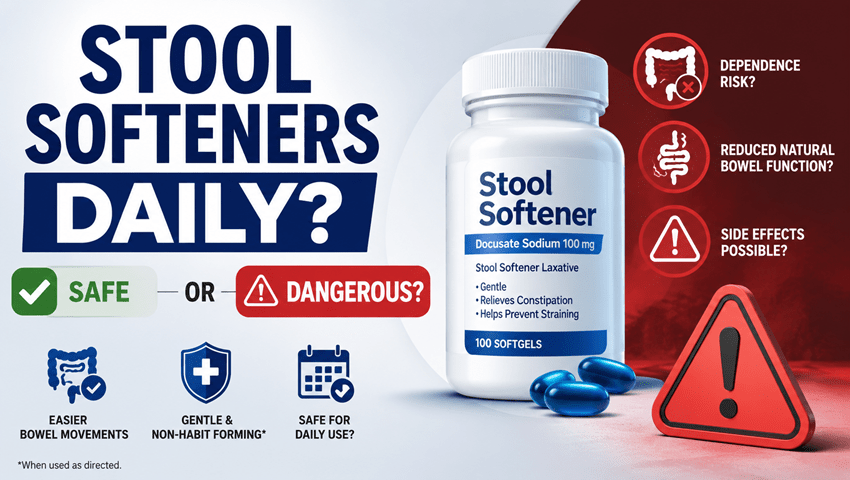
Stool Softeners Daily? Safe or Dangerous?
Many people in India take stool softeners every single day. Some have been doing it for months. Some even for years. They feel that without it, passing stool is too painful. Or too difficult. So they take one pill every morning and move on.
But is this habit actually safe? Or is it slowly causing more harm than good?
This is one of the most common questions that patients ask when they visit Dr. Raviram S. at Thrissur Piles Clinic. As a leading Proctologist in Thrissur, he sees many patients who have been self-medicating with stool softeners for a very long time. Most of them do not even know why they started. They just never stopped.
The truth is — stool softeners are not meant for daily, long-term use. They are a support, not a solution.
If you are taking them every day, your body is trying to tell you something. And it is important to listen.
In this blog, we will explain everything simply. What stool softeners do. When they are safe. When they become dangerous. And what you should do instead.
What Are Stool Softeners?
Stool softeners are medicines that help add moisture to the stool. They make stool softer and easier to pass. They do not force the bowels to move like laxatives do. They simply make the process gentler.
Common stool softeners include docusate sodium and isabgol (psyllium husk). Glycerin suppositories also work in a similar way. These are available over the counter in most pharmacies across India.
They are often recommended after childbirth, surgery, or during conditions like piles, anal fissures, and fistulas.
When Are Stool Softeners Actually Helpful?
Stool softeners are genuinely useful in certain situations. Here are some cases where doctors recommend them:
- After anorectal surgery – Straining after a piles or fissure procedure can be very painful. Stool softeners help the healing process.
- During active piles or fissures – Hard stools can worsen bleeding and pain. Softeners reduce this risk.
- Temporary constipation – If you are constipated due to travel, diet changes, or medications, stool softeners offer short-term relief.
- Pregnancy and postpartum – Straining during this time puts pressure on the pelvic floor. Stool softeners are safer than stimulant laxatives.
In all these cases, short-term use is perfectly appropriate. The problem begins when short-term becomes long-term.
Is Daily Use of Stool Softeners Safe?
Here is the honest answer: Short-term daily use is generally safe. Long-term daily use is a concern.
Most medical guidelines suggest using stool softeners for a few days to a few weeks. Not for months or years.
When you use them daily for a long time, a few things can happen:
- Your Bowels Become Dependent: The digestive system is smart. If it gets external help every day, it starts relying on it. Over time, your colon may stop working as efficiently on its own. This is called laxative dependence.
- Electrolyte Imbalance: Some stool softeners and laxatives, especially stimulant types, can affect your body’s balance of sodium, potassium, and magnesium. This can cause weakness, cramps, and in severe cases, irregular heartbeat.
- Underlying Problems Get Ignored: This is the biggest danger. If you need a stool softener every day, there is likely an underlying issue. It could be a low-fibre diet, poor hydration, or a medical condition. Masking the problem with daily softeners delays proper diagnosis and treatment. Conditions like chronic anal fissures, internal piles, or pelvic floor dysfunction all cause straining and pain. These need medical attention, not just softeners.
- Rectal Muscle Weakness: In some cases, long-term softener use combined with a sedentary lifestyle can weaken the rectal muscles. This may eventually lead to incomplete evacuation or other bowel issues.
What Conditions Make You Need Stool Softeners Daily?
If you feel you cannot manage without a stool softener every day, it is time to ask why. Some of the most common reasons include:
- Chronic constipation caused by low fibre or water intake
- Piles (Haemorrhoids) – Internal piles make straining very painful
- Anal fissure – A small tear in the anal lining that makes passing stool feel like passing glass
- Fistula-in-ano – An infected tunnel near the anus that causes discomfort
- Pilonidal sinus – A cyst near the tailbone area that can affect bowel comfort
- Irritable Bowel Syndrome (IBS)
All of these conditions need proper diagnosis and treatment. A Proctologist can examine you and find the real cause. You should not simply continue with daily softeners without knowing why you need them.
What Does Dr. Raviram S. Say?
Dr. Raviram S., the Founder and Director of Thrissur Piles Clinic, is one of the most trusted Proctologist doctors in Thrissur. He holds an MCh in Surgical Gastroenterology from Government Medical College, Thiruvananthapuram, and has over 16+ years of experience in treating proctological conditions.
Dr. Raviram S. has performed more than 4,000+ advanced procedures including laser piles surgery, fistula treatments, fissure repairs, and pilonidal sinus surgeries.
He regularly sees patients who have been self-medicating with stool softeners for months. His advice is clear:
“Stool softeners are a supportive measure, not a cure. If you need them every day, something is not right. Come and get examined. In most cases, the underlying condition is very treatable.”
At Thrissur Piles Clinic, which is a leading Proctology Clinic in Thrissur, modern diagnostic tools are used to identify the root cause quickly. Treatment is minimally invasive and recovery is fast.
Safe Alternatives to Daily Stool Softeners:
Before you reach for the softener bottle each morning, try these lifestyle changes:
- Increase fibre gradually – Include more fruits, vegetables, legumes, and whole grains in your meals. Aim for 25–30 grams of fibre daily.
- Drink more water – At least 8 to 10 glasses of water a day keeps the stool soft naturally.
- Walk regularly – Even a 20-minute walk after meals can stimulate bowel movement.
- Do not ignore the urge – When you feel the urge to pass stool, go. Holding it back makes stool harder and harder to pass.
- Avoid processed foods – Maida, junk food, and fried snacks slow digestion. These are very common in modern Indian diets.
- Reduce stress – Stress affects gut motility. Yoga and deep breathing exercises can genuinely help.
These changes, along with proper medical treatment if needed, can help you stop needing daily stool softeners altogether.
When Should You See a Doctor?
Please do not wait too long. See a doctor if:
- You have been using stool softeners for more than 2 to 3 weeks continuously
- You notice blood in your stool
- You feel pain or burning during bowel movements
- You have discharge, itching, or swelling around the anus
- You feel incomplete evacuation every day
- You are losing weight unexpectedly
These are signs that need proper evaluation. A visit to a qualified Proctologist in Thrissur can give you answers and relief faster than you expect.
Why Choose Thrissur Piles Clinic?
Thrissur Piles Clinic is a dedicated Proctology Clinic in Thrissur led by Dr. Raviram S., an award-winning Laser Proctologist. The clinic has treated over 15,000 happy patients with a 99% success ratio.
Services include:
- Laser Piles Surgery (Haemorrhoidectomy)
- Laser Fistula Treatment (FILAC, VAAFT)
- Anal Fissure Treatment
- Pilonidal Sinus Surgery
- Advanced Colonoscopy and Proctoscopy
The clinic is open 24 hours. You can reach them at 9961001199 or email drraviram12@gmail.com. Visit them at 1st Floor, Room No. 2, Zabs Fort, Collectorate Road, West Fort, Thrissur, Kerala 680004.
Conclusion:
Stool softeners are helpful when used correctly. For a short time, during surgery recovery or an acute flare-up, they are completely fine. But using them daily for months is a red flag.
Your body is trying to tell you something. Do not silence it with a pill every morning. Get examined. Get treated. Get relief.
Dr. Raviram S. and the team at Thrissur Piles Clinic are here to help. Book your consultation today and take the first step toward lasting digestive health.