
- 16/11/2026
- Dr. Raviram
- 0 Comments
- Piles
Thrombosed External Hemorrhoid: How Long Does It Take to Heal?
Have you suddenly noticed a painful, hard lump near your anus? Does sitting, walking, or passing stools cause significant discomfort? You might be experiencing a thrombosed external hemorrhoid, a condition that occurs when a blood clot forms inside an external hemorrhoid.
Although the sudden pain and swelling can be alarming, thrombosed external hemorrhoids are generally not dangerous, and many cases improve without surgery. If you need expert piles treatment in Thrissur, early evaluation by a specialist can help you find relief faster.
However, one of the most common questions patients ask is, “How long does a thrombosed external hemorrhoid take to heal?”
The answer depends on the size of the clot, the severity of symptoms, and the treatment approach. In this article, we explain the healing process, symptoms, available treatments, and when you should consult a specialist.
What Is a Thrombosed External Hemorrhoid?
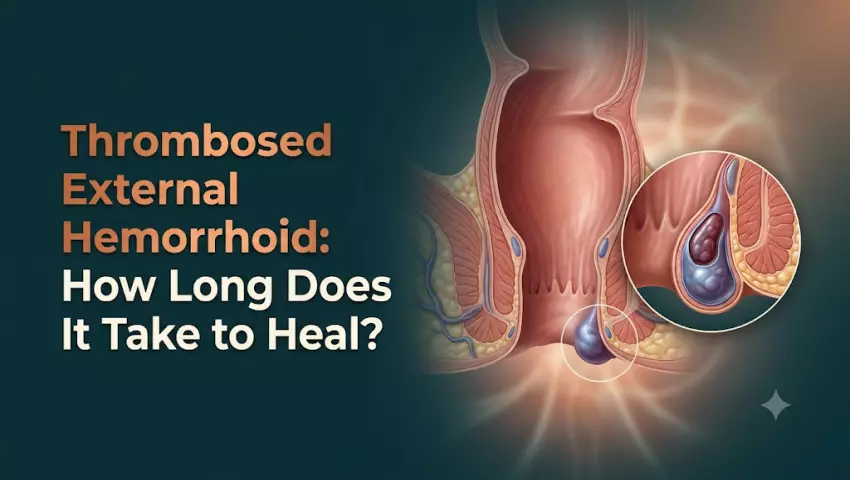
External hemorrhoids are swollen blood vessels located beneath the skin around the anus. When blood collects and forms a clot inside an external hemorrhoid, it is called a thrombosed external hemorrhoid.
Unlike ordinary external hemorrhoids, which may cause mild swelling or discomfort, a thrombosed hemorrhoid can produce sudden, intense pain.
Common characteristics include:
- A firm, tender lump near the anal opening
- Bluish or purple discolouration of the lump
- Sudden pain that may become severe
- Swelling and tenderness around the anus
- Difficulty sitting or walking comfortably
- Occasional bleeding if the overlying skin breaks down
The blood clot remains localised within the hemorrhoid. It does not typically travel through the bloodstream or cause a pulmonary embolism.
However, not every painful anal lump is a thrombosed hemorrhoid. Conditions such as a perianal abscess can cause similar symptoms and may require urgent treatment.
How Long Does a Thrombosed External Hemorrhoid Take to Heal?
Most thrombosed external hemorrhoids improve significantly within one to two weeks, although complete resolution of the lump may take two to six weeks or occasionally longer.
The healing time varies depending on the severity of swelling, clot size and individual recovery.
First 24–72 Hours: Acute Pain and Swelling
During the first few days, patients may experience:
- Sudden, severe pain around the anus
- A hard, swollen lump
- Difficulty sitting comfortably
- Increased tenderness during bowel movements
Pain is often most intense during the first 48–72 hours. Patients experiencing severe pain during this early period should seek prompt medical evaluation because certain procedures may provide faster relief in appropriately selected cases.
Days 4–7: Pain Begins to Improve
As the initial inflammation settles, many patients notice:
- Gradual reduction in pain
- Less tenderness around the lump
- Improved comfort while sitting and walking
- Reduced swelling
The lump may still be noticeable even after the pain begins to decrease.
Week 2: Significant Symptom Relief
By the second week, many patients experience substantial improvement. The body gradually breaks down and absorbs the blood clot, reducing the size of the swelling.
However, the lump may not disappear completely at this stage.
Weeks 3–6: Gradual Resolution
Over the following weeks, the remaining swelling often continues to shrink. Some patients may notice a small, soft skin tag after the clot resolves. This residual skin tag is usually harmless but can occasionally cause hygiene difficulties or irritation.
Important: These timeframes are approximate. Increasing pain, fever, spreading redness, pus discharge or significant bleeding should not be considered part of normal healing.
What Causes a Thrombosed External Hemorrhoid?
A thrombosed external hemorrhoid develops when a blood clot forms within the external hemorrhoidal veins. Several factors may contribute to increased pressure and irritation around the anal region.
- Constipation and Straining: Passing hard stools and excessive straining can increase pressure on the hemorrhoidal blood vessels.
- Prolonged Sitting on the Toilet: Spending excessive time on the toilet may increase pressure around the anal region.
- Heavy Lifting: Repeated heavy lifting, particularly while holding your breath or straining, may contribute to increased abdominal pressure.
- Pregnancy: Hormonal changes and increased pelvic pressure during pregnancy can contribute to hemorrhoidal problems.
- Chronic Diarrhoea: Frequent bowel movements and repeated irritation may aggravate existing hemorrhoids.
- Previous Hemorrhoidal Problems: Individuals with a history of hemorrhoids may experience further episodes, although recurrence is not inevitable.
Can a Thrombosed External Hemorrhoid Heal Without Surgery?
Yes. Many thrombosed external hemorrhoids heal naturally without surgery.
The body gradually breaks down and absorbs the clot, allowing the swelling and discomfort to decrease.
Conservative treatment is often appropriate when:
- Pain is manageable
- Symptoms are already improving
- There are no concerning complications
- The patient prefers non-surgical management after medical assessment
However, conservative treatment does not provide immediate relief for every patient.
Patients with severe pain, particularly within the first 72 hours of symptom onset, may benefit from an early procedural assessment. The decision depends on symptom severity, examination findings, medical history and patient preference.
How to Relieve Thrombosed Hemorrhoid Pain at Home?
Several measures can help reduce discomfort while the hemorrhoid heals.
1. Take Warm Sitz Baths:
Sitting in comfortably warm water for approximately 10–15 minutes, a few times daily, may help soothe the affected area. Avoid excessively hot water, which can irritate or burn the skin.
2. Prevent Constipation:
Soft stools can reduce straining and discomfort during bowel movements. Helpful measures include:
- Eating fibre-rich foods
- Drinking adequate water
- Including fruits and vegetables in daily meals
- Maintaining regular physical activity
- Using a fibre supplement or stool softener if recommended by a doctor
3. Use Pain-Relieving Medication Appropriately:
A doctor may recommend suitable oral pain-relieving medication or short-term topical treatment. Not all creams are appropriate for every patient, and prolonged use of steroid-containing products can cause skin problems.
4. Avoid Excessive Straining:
Do not force bowel movements or spend prolonged periods sitting on the toilet.
5. Maintain Gentle Anal Hygiene:
Clean the affected area gently with water and pat it dry. Avoid harsh soaps, vigorous rubbing and irritating products.
6. Avoid Trying to Drain the Clot Yourself:
Never attempt to puncture, squeeze or cut a thrombosed hemorrhoid at home. Doing so may cause bleeding, infection and additional tissue injury.
When Is Surgery Needed for a Thrombosed External Hemorrhoid?
Not every thrombosed external hemorrhoid requires surgery.
However, a minor procedure may be considered when the patient has severe pain or a large, very tender thrombosis.
Can a Thrombosed External Hemorrhoid Come Back?
Yes, recurrence is possible. Even after the original clot resolves, another thrombosed hemorrhoid may develop in the future. Although recurrence cannot always be prevented, healthy bowel habits may help reduce hemorrhoidal symptoms.
Consider these preventive measures:
- Maintain adequate dietary fibre intake
- Stay appropriately hydrated
- Avoid prolonged straining during bowel movements
- Limit unnecessary time on the toilet
- Exercise regularly
- Address persistent constipation or diarrhoea
- Seek medical advice for recurring anal swelling or pain
Patients experiencing repeated episodes should consult a specialist to evaluate the underlying problem and discuss long-term management.
When Should You Consult a Piles Specialist?
A thrombosed external hemorrhoid may improve without surgery, but medical assessment is important when symptoms are severe or the diagnosis is uncertain. Consulting an experienced proctologist in Thrissur can help you get an accurate diagnosis and the right treatment plan.
Seek prompt medical attention if you experience:
- Sudden, severe anal pain
- A rapidly enlarging painful lump
- Persistent or heavy rectal bleeding
- Fever, chills or pus discharge
- Increasing redness or swelling
- Difficulty passing urine
- Pain that continues to worsen rather than improve
Early evaluation by a proctologist in Thrissur can help distinguish a thrombosed hemorrhoid from other conditions requiring different treatment.
Thrombosed External Hemorrhoid Treatment in Thrissur:
If you are experiencing a sudden painful lump near the anus, persistent swelling or recurring hemorrhoidal symptoms, a specialist consultation can help identify the cause and determine the appropriate treatment.
At Thrissur Piles Clinic, patients can seek evaluation for piles and other anorectal conditions. Treatment recommendations depend on clinical findings, symptom severity and individual patient needs.
Some patients may recover with conservative management, while others may benefit from an early procedure. The goal is to relieve discomfort, support healing, and reduce the likelihood of avoidable complications.
Experiencing painful piles or a lump near the anus?
Conclusion:
A thrombosed external hemorrhoid can cause sudden and significant pain, but it often improves without surgery. Pain typically begins to settle within a few days, while complete resolution of the swelling may take two to six weeks or longer.
Warm sitz baths, constipation prevention, appropriate pain relief and gentle hygiene can support recovery. However, severe pain, worsening symptoms or recurrent episodes need specialist evaluation rather than home remedies alone.
For expert care of painful hemorrhoids in Thrissur, book an appointment with Thrissur Piles Clinic today.
Frequently Asked Questions
Most thrombosed external hemorrhoids improve significantly within one to two weeks. Complete resolution of the lump may take two to six weeks or occasionally longer, depending on the size of the clot and how severe the symptoms are.
Yes. Many cases heal without surgery as the body gradually breaks down and absorbs the clot. However, if the pain is severe or not improving, it is best to consult a specialist.
It is usually not dangerous. The clot stays within the hemorrhoid and does not typically travel through the bloodstream. However, a perianal abscess can look similar and needs urgent treatment, so get a proper diagnosis if you are unsure.
Pain is usually most intense during the first 48 to 72 hours. After that, it gradually reduces over the following days.
Warm sitz baths for 10 to 15 minutes a few times a day, a fibre-rich diet, plenty of water, avoiding straining and gentle cleaning with water can all help. Take any medication or cream only as advised by your doctor.