
- 22/09/2026
- Dr. Raviram
- 0 Comments
- Fistula
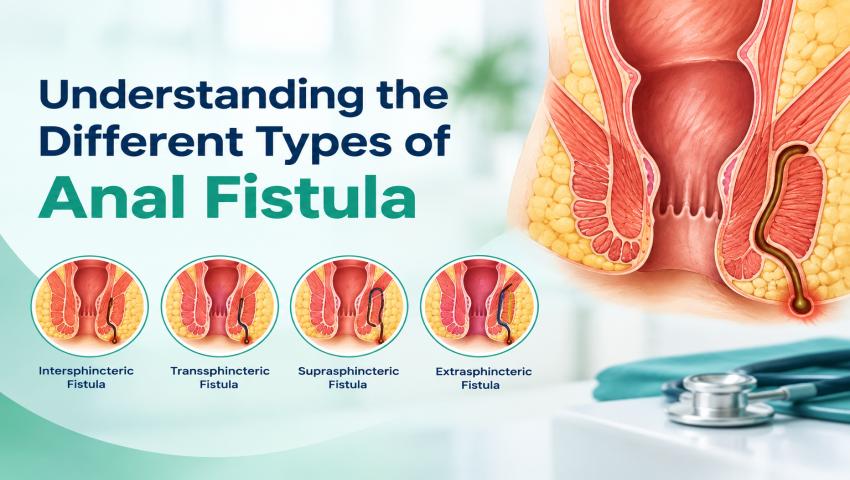
Understanding the Different Types of Anal Fistula
Not every anal fistula is the same — and that one fact changes everything about how it should be treated.
Many patients are surprised to learn that a fistula isn’t just a single condition with one fixed treatment. Depending on where the tract runs, how deep it goes, and how it relates to the surrounding muscles, an anal fistula can be simple to manage or fairly complex.
Dr. Raviram S., a proctologist with over 16 years of experience, has seen this play out again and again in his clinic. According to him, understanding the type of fistula is the single most important step before any treatment decision is made — it’s what determines whether a straightforward procedure will work or whether a more advanced approach is needed. For anyone looking into Fistula Treatment in Thrissur, or someone who’s just been diagnosed and wants to understand what their doctor is telling them, this blog breaks down exactly that.
What Causes an Anal Fistula, Really?
An anal fistula rarely appears out of nowhere. It’s usually the aftermath of an anal abscess that didn’t fully heal — the infection drains, but instead of closing cleanly, it leaves behind a small tunnel connecting the anal canal to the skin outside.
Sometimes there’s more to it — Crohn’s disease, tuberculosis, or a previous surgery that didn’t go as planned. That’s why, when a patient asks about what causes it, doctors always start by reviewing their history first. The cause often hints at the type, and the type is what really matters for treatment.
A Quick Word on Anatomy:
Let’s keep this simple. Around the anus, there are two ring-shaped muscles called sphincters — one inner, one outer. Together, they’re what let a person control their bowel movements.
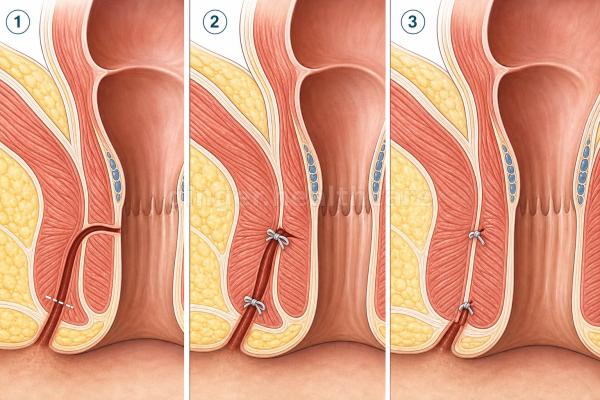
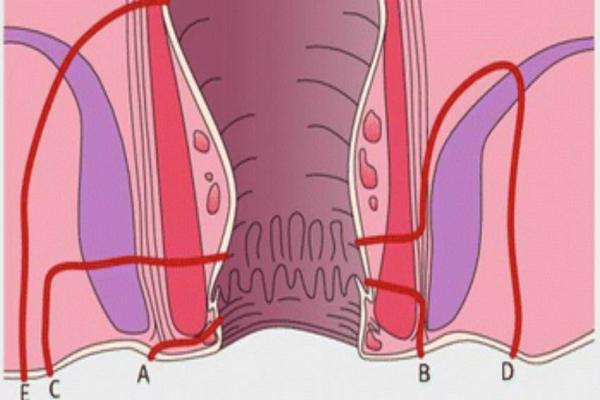
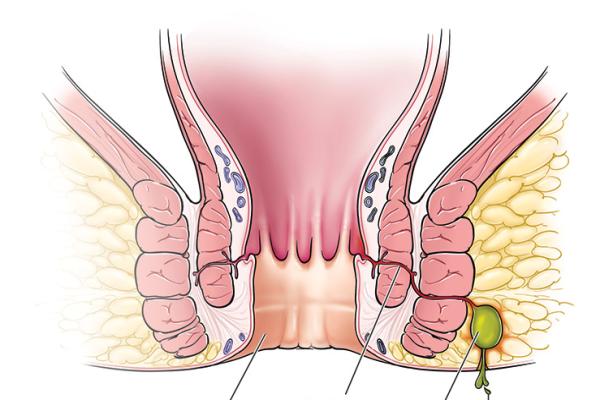
Now, an anal fistula is basically a tunnel, and this tunnel can travel in different ways around these muscles. Sometimes it stays in between the two, sometimes it cuts straight through both, and sometimes it goes all the way around them. This path — where exactly the tunnel goes in relation to these muscles — is the single most important thing doctors look at, because it decides everything else: how complex the fistula is and how it needs to be treated.
This entire area around the anus, where all of this happens, is simply called the perianal region — if you’ve searched for perianal meaning, that’s really all it refers to.
How Doctors Actually Classify Fistulas?
There isn’t one single way to describe an anal fistula — doctors use a layered system, and once it’s understood, the topic feels far less intimidating. Think of these simply as different lenses used to look at the same problem.
- Parks’ classification — the gold standard worldwide, and the backbone of most fistula classification
- St James’s classification of fistula — a newer, MRI-based system used mainly when imaging is involved, especially to grade how complex a tract is.
- MR fistulography — if this scan has been done, the radiology report likely references the St James’s classification directly, since it’s become fairly standard now.
The Four Main Types (Parks' Classification):

Intersphincteric Fistula
By far the most common — nearly 70% of cases. The tract stays tucked between the internal and external sphincter and opens close to the anus. Since it doesn't cross the outer muscle, it's usually the most straightforward to treat.
Transsphincteric Fistula
This one pushes through both sphincter muscles before surfacing on the skin, a little further out. More muscle involved means more care is needed in planning — the aim is always to avoid risking bowel control for a quicker fix.
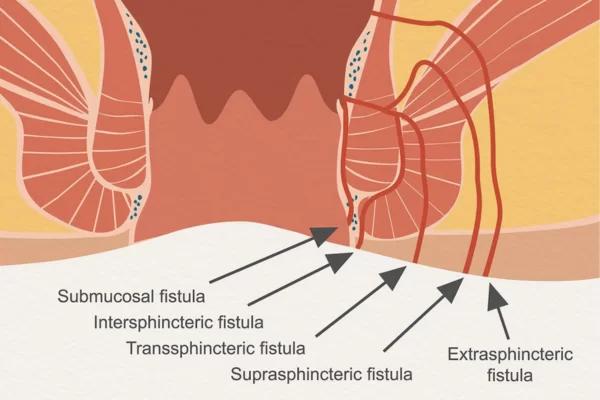
Suprasphincteric Fistula
Rarer, and it behaves a bit unusually. Instead of cutting through, it loops above the sphincter complex — over the puborectalis muscle — before coming back down. It demands real surgical skill to manage well.
Extrasphincteric Fistula
The one seen least often, and arguably the trickiest. It skips the sphincter muscles altogether and often connects to something happening deeper in the pelvis, sometimes tied to Crohn's disease. These need a thorough workup before any decision is made.
Simple, Complex — And Why That Distinction Matters Too:
Beyond the four types above, doctors also talk about anal fistulas in more everyday language — simple versus complex.
- Simple fistula: a single, low-lying tract, doesn’t involve much of the sphincter. Responds well to a quick, straightforward procedure.
- Complex fistula: may branch into multiple tracts, involve more muscle, or come attached to a condition like Crohn’s disease. Needs a more considered approach — and this is exactly where something like the Best Laser Fistula Treatment in Thrissur makes a real difference: less tissue damage, quicker recovery, and better outcomes for the trickier cases.
Low or High — It Changes the Approach:
Another way of looking at an anal fistula is simply by its height — essentially, how much sphincter muscle stands in its way.
- Low fistula: involves just a small portion of the muscle, so treatment tends to be simple with very little risk to continence.
- High fistula: involves more muscle, and here doctors have to be far more deliberate, since the margin for error affecting bowel control is thinner.
This is exactly why patients are advised — please don’t try to guess which category applies to you. Only a proper examination by a trained proctologist in Thrissur can tell you for sure.
What About Horseshoe Fistulas?
This one gets its name from its shape. Instead of running in a straight line, the tract curves — usually starting at the back of the anus and sweeping around to both sides, resembling a horseshoe.
These tend to be complex by nature and have a reputation for coming back if not managed properly the first time. This is exactly why, for a horseshoe fistula, opting for the Best Laser Fistula Treatment in Thrissur genuinely matters for a lasting result.
When Should You Actually See a Doctor?
Please don’t wait it out if you notice any of these signs:
- Pain that won’t go away
- Swelling that keeps returning
- Discharge with a bad odor
- An abscess that seems to heal and then flare up again
Anal fistulas don’t resolve on their own. Left alone, they tend to get more complicated, not less.
A physical examination, sometimes paired with an MRI or a fistulogram test, usually gives enough clarity to plan the right treatment. The earlier this happens, the simpler and quicker treatment and recovery are likely to be.
Bringing It All Together:
If there’s one thing to take away, it’s this — an anal fistula is never just “a fistula.” The type matters, the height matters, even the shape matters. Getting this right the first time is what stands between a smooth recovery and years of dealing with the same problem on repeat.
Anyone dealing with symptoms shouldn’t sit on it. After seeing too many patients go through repeat surgeries simply because the type was missed early on, the advice remains simple — get the fistula type properly identified before starting any treatment. For anyone looking for reliable Fistula Treatment in Thrissur, this is exactly the first step to get right. Book an appointment with Dr. Raviram S. today, and get the right approach identified from the start. It can be the difference between a quick recovery and a long, frustrating one.
Frequently Asked Questions:
Usually not. A fistula is a formed tunnel, not a simple wound, so it rarely closes on its own. Dr. Raviram S., who has treated hundreds of fistula cases at his Thrissur clinic over 16 years, notes that delaying treatment often makes the tract more complex instead.
Through a physical examination combined with imaging like an MRI or MR fistulography. At Dr. Raviram S.’s clinic in Thrissur, this combination is standard practice, since mapping the tract accurately is what allows the right classification and treatment plan.
Not always, but it works very well for many cases, especially complex or recurrent ones like horseshoe fistulas. The Best Laser Fistula Treatment in Thrissur, offered under Dr. Raviram S.’s guidance, is chosen based on the fistula’s specific type rather than a one-size-fits-all approach.
Yes. Simple, low fistulas heal faster with minimal downtime, while complex or high fistulas need more careful planning and a longer recovery. Dr. Raviram S. and his team at their Thrissur clinic tailor recovery timelines to the exact type diagnosed.
This is one of the most common causes of recurrence. A missed classification often means the treatment doesn’t fully address the tract. That’s why Dr. Raviram S. emphasises accurate diagnosis first, at his Thrissur clinic, before recommending any treatment.