
- 28/08/2026
- Dr. Raviram
- 0 Comments
- Anal Abscesses
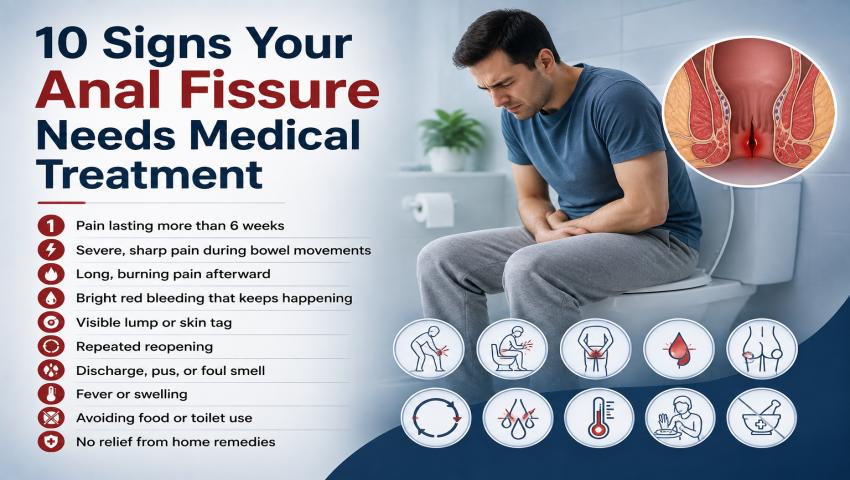
10 Signs Your Anal Fissure Needs Medical Treatment
What if the pain you’ve been managing with fiber and warm water baths for weeks isn’t actually healing — just going quiet between flare-ups?
That’s the tricky part about an anal fissure. It often starts as a small, sharp pain during a bowel movement, and most people assume it’ll heal on its own with a few lifestyle changes. And sometimes it does. But other times, the fissure keeps reopening quietly, the pain becomes a routine part of the day, and by the time it feels “too much,” it has already turned chronic — needing proper Fissure Treatment in Thrissur rather than another few weeks of home care.
Dr. Raviram S., a Proctologist in Thrissur, sees this exact situation often — patients who waited months, convinced their fissure would eventually heal, before finally getting it examined. This blog lists out ten clear signs that tell you it’s time to stop waiting and get your anal fissure properly checked.
10 Signs Your Fissure Needs Attention:
Sign 1: Pain Lasting More Than 6 Weeks (Chronic Fissure)
If the pain has stuck around for more than six weeks despite home care, it’s officially considered a chronic anal fissure. At this stage, the tear has usually stopped healing on its own, and it needs a proper evaluation rather than another round of creams. A few things typically happen once a fissure turns chronic:
- The edges of the tear start to harden instead of healing
- A skin tag or sentinel pile may develop nearby
- The underlying sphincter muscle becomes visible at the base of the tear
- Home remedies stop making any real difference
This is usually the point where a specialist visit and proper Fissure Treatment in Thrissur become far more useful than continuing to wait it out.
Sign 2: Severe, Sharp Pain During Bowel Movements
Mild discomfort is expected with a fissure, but severe pain is a different story. Watch out for:
- Pain that feels like “passing glass” or a sharp knife-like sensation
- Pain sharp enough to make you delay or avoid bowel movements
- Pain that doesn’t ease even minutes after passing stool
This level of pain usually points to a deeper tear or ongoing muscle spasm that needs more than home remedies.
Sign 3: Long, Burning Pain After Bowel Movements
A short sting right after using the toilet is normal. But if the burning pain lingers for hours afterward, it’s a sign the anal sphincter muscle is going into spasm each time, which keeps re-injuring the fissure and slowing down healing.
This creates a cycle that’s hard to break on its own — the spasm restricts blood flow to the area, and reduced blood flow is exactly what a healing fissure needs the most. The longer this pattern continues, the more it delays recovery, even with otherwise good home care.
Sign 4: Bright Red Bleeding That Keeps Happening
The odd streak of blood once in a while isn’t unusual with a fissure. But it’s worth paying closer attention if you notice:
- Bright red blood on the toilet paper regularly, not just occasionally
- Blood coating or mixed into the stool itself
- Bleeding that seems to be increasing over time
This could mean the tear is deeper than it seems, or there’s another underlying cause that needs to be ruled out.
Sign 5: A Visible Lump or Skin Tag (Sentinel Pile)
A small skin tag, sometimes called a “sentinel pile,” often forms at the edge of a chronic fissure. It’s worth checking for:
- A soft lump right at the outer edge of the tear
- A skin tag that doesn’t hurt on its own but sits near the painful area
- A lump that’s grown slowly over weeks rather than appearing overnight
If you notice a new lump near the area that wasn’t there before, it’s usually a sign the fissure has been present for a while and has become chronic. It doesn’t always need to be removed, but it’s a useful marker that tells a doctor how long the issue has actually been going on.
Sign 6: Repeated Reopening (Fissure Keeps Coming Back)
If the fissure seems to heal slightly, only to tear open again with the next hard stool, this cycle can continue indefinitely without proper treatment. A fissure that keeps coming back needs a different approach than simply waiting it out again — and for many recurring cases, options like Laser treatment for fissures in Thrissur can offer a faster, more permanent solution than repeated home care.
Sign 7: Discharge, Pus, or Signs of Infection
Any discharge, pus, or a foul smell around the area is not typical of a straightforward fissure. Watch for:
- Yellowish or cloudy discharge
- A foul smell around the anal area
- Ongoing wetness or irritation between bowel movements
These could point to an infection or even an early fistula — a clear signal that self-care at home isn’t enough anymore.
Sign 8: Fever or Swelling Around the Area
Fever combined with swelling near the anal area is a red flag and may indicate an abscess. Look out for:
- New or increasing swelling
- Fever, even if mild
- Increasing redness or warmth
These symptoms need prompt medical attention. Consulting a Proctologist in Thrissur can help identify the cause and ensure timely treatment.
Sign 9: Fear of Eating or Using the Toilet (Avoidance Behaviour)
When the pain becomes bad enough that you start avoiding meals to reduce bowel movements, or dread using the toilet altogether, it’s affecting your daily life in a real way. Common signs of this include:
- Skipping or delaying meals to avoid needing the toilet
- Putting off bowel movements even when the urge is there
- Feeling anxious or on edge around the time you’d normally go
- Noticing constipation getting worse because you’re avoiding the toilet
This kind of avoidance often makes constipation worse, which in turn worsens the fissure — a cycle that’s hard to break without help, since each avoided bowel movement usually means a harder stool the next time around.
Sign 10: No Relief From Home Remedies
Fiber, plenty of water, and warm sitz baths can help many anal fissures heal. Try:
- 25–30 g of fiber daily
- Enough water to keep stools soft
- Warm sitz baths 2–3 times a day
- Avoiding straining during bowel movements
If you’ve followed these steps consistently for a few weeks but still have pain or discomfort, the fissure may need medical treatment. A doctor can assess the fissure and recommend the right treatment, which may include prescription ointments or Botox depending on the severity and duration.
Conclusion:
Most anal fissures heal with proper home care, but persistent or recurring pain should not be ignored. If symptoms continue or affect your daily life, consult a Proctologist in Thrissur for proper diagnosis.
Dr. Raviram S., with 16 years of experience, provides personalized Fissure Treatment in Thrissur, including Laser treatment for fissures in Thrissur when required. Book an appointment early to ensure faster relief and a simpler recovery.
FAQ's:
If the pain lasts more than six weeks, keeps recurring, or comes with bleeding, discharge, or fever, it’s considered serious and needs a proper medical evaluation.
Most acute fissures heal within a few weeks with proper home care. If it’s still present after six weeks, it’s classified as chronic and usually needs medical treatment.
No. With timely and appropriate treatment, most fissures — even chronic ones — heal completely. Leaving them untreated for too long is what tends to cause repeated problems.
Increasing fiber intake, staying hydrated, taking warm sitz baths, and avoiding straining during bowel movements all help. If there’s no improvement within a couple of weeks, it’s best to consult a specialist rather than continuing home remedies alone.