
- 22/07/2026
- Dr. Raviram
- 0 Comments
- Fissure
Can Anal Fissures Cause Muscle Spasms?
Have you ever felt a sharp, cutting pain during a bowel movement, only to notice that the pain doesn’t stop once you’re done? Instead, it changes into a tight, cramping sensation around the anus that can last for minutes or even hours. If this sounds familiar, you’re likely experiencing anal fissure muscle spasms—one of the most painful symptoms of an anal fissure.
According to Dr. Raviram S., Proctologist in Thrissur with over 16 years of experience, many patients assume that lingering pain after a bowel movement is normal. In reality, it is often caused by anal sphincter muscle spasms, which can delay healing if left untreated. Understanding why they happen is the first step towards effective recovery. If you’re looking for fissure treatment in Thrissur, knowing how muscle spasms affect healing can help you seek timely care and avoid long-term complications.
Can Anal Fissures Cause Muscle Spasms?
The short answer is yes. In fact, muscle spasms are one of the most common and painful symptoms of an anal fissure. Many people believe the small tear itself is responsible for all the pain, but what often causes the lingering discomfort is the body’s reaction to that tear.
Think of it this way—when you accidentally cut your finger, your hand instinctively pulls away to protect the injured area. A similar thing happens inside the anal canal. When an anal fissure develops, the anal sphincter muscle (the ring of muscle around the anus) automatically tightens to protect the injured tissue. This involuntary tightening is called a muscle spasm.
The problem is that this protective response becomes counterproductive. Instead of helping the fissure heal, the constantly tightened muscle creates a chain reaction:
Pain from the fissure → Muscle spasm → Reduced blood flow → Slower healing → More pain
Here’s a simple visual explanation of how anal fissure muscle spasms develop and why they can slow down the healing process.
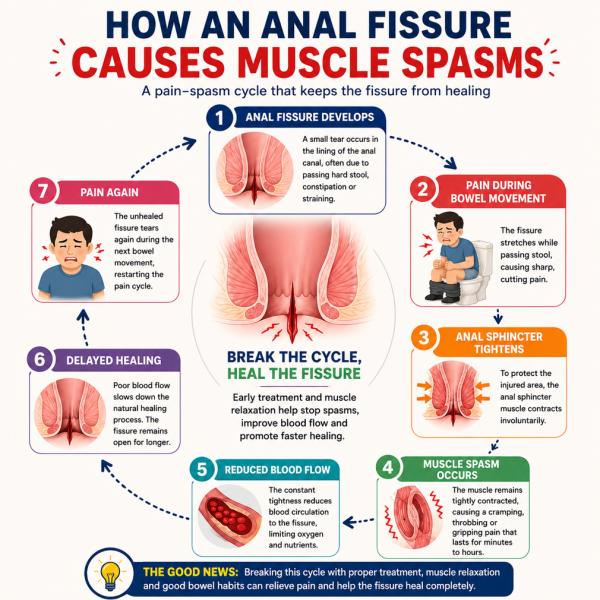
As the muscle stays contracted, blood circulation to the fissure decreases. Since every wound needs a good blood supply to heal, the reduced circulation delays recovery. The fissure remains open for longer, and every bowel movement can trigger the same painful cycle again.
This is why many patients experience two different types of pain:
During Bowel Movement:
- Sharp, cutting pain
- Burning sensation
- Fresh bleeding
After Bowel Movement:
- Deep cramping pain
- Tight muscle spasm
- Pain lasting minutes to hours
The second type of pain can last anywhere from a few minutes to several hours, making simple activities like sitting, walking, or even relaxing uncomfortable.
Dr. Raviram S. explains that many patients focus only on the tear itself, while the real reason for prolonged pain is often the persistent muscle spasm. Successfully treating the muscle spasm helps break the pain cycle, restore healthy blood flow, and allow the fissure to heal more effectively. That’s why modern treatment doesn’t just aim to heal the tear—it also focuses on relaxing the anal sphincter so that normal blood flow can return and the healing process can begin.
Why Muscle Spasms Occur in Anal Fissures?
The anal sphincter is designed to stay tightly closed to maintain bowel control. When a fissure develops, the exposed nerve endings become extremely sensitive.
As a protective response, the sphincter muscle contracts suddenly. Unfortunately, this response often does more harm than good.
Here’s why:
- The tear exposes sensitive nerve endings.
- The anal sphincter tightens automatically.
- The muscle spasm reduces blood supply to the area.
- Reduced blood flow slows healing.
- The unhealed fissure causes more pain, triggering further spasms.
This is commonly known as the pain-spasm cycle, and breaking this cycle is one of the main goals of treatment.
Signs and Symptoms of Anal Sphincter Muscle Spasms:
Patients often describe anal fissure muscle spasms differently from the sharp pain of the tear itself.
Common sensations include:
- A tight, gripping feeling around the anus
- Throbbing pain after passing stool
- Cramping or squeezing pain that comes in waves
- A feeling that the muscles are “locked” or won’t relax
- Pain that may continue for 30 minutes to several hours
Some patients also find it difficult to sit comfortably because the muscles remain tense even after the bowel movement is over.
Can Muscle Spasms Make an Anal Fissure Worse?
Yes. Persistent muscle spasms can significantly slow down healing.
When the anal sphincter remains tight:
- Less oxygen-rich blood reaches the fissure.
- The tear struggles to repair itself.
- Every bowel movement can reopen the wound.
- Pain becomes more frequent and intense.
According to Dr. Raviram S., many patients assume that pain alone is the problem. However, it is often the continuous muscle spasm that prevents the fissure from healing naturally.
Breaking this cycle early usually leads to faster recovery and less discomfort.
Duration of Anal Fissure Muscle Spasms:
The duration varies depending on how severe the fissure is.
Generally:
- Mild fissures: Spasms may last a few minutes after bowel movements.
- Moderate fissures: Pain and spasms can continue for one to two hours.
- Chronic fissures: Muscle tightness may occur repeatedly throughout the day, even without passing stool.
If muscle spasms continue for several weeks despite home care, it is important to consult a specialist rather than waiting for them to settle on their own.
Home Remedies to Relieve Anal Fissure Muscle Spasms:
Home care can help reduce discomfort, especially in the early stages.
You can try:
- Warm sitz baths for 15–20 minutes several times a day.
- Drinking plenty of water.
- Eating a fibre-rich diet to avoid constipation.
- Avoiding excessive straining during bowel movements.
- Using prescribed stool softeners if recommended by your doctor.
- Following any ointments or medicines advised by your specialist.
However, if pain and spasms continue despite these measures, professional evaluation is important. Patients seeking fissure treatment in Thrissur often benefit from early treatment before the fissure becomes chronic.
Can Untreated Spasms Lead to a Chronic Fissure?
YES.
When muscle spasms continue for weeks, they keep reducing blood supply to the affected area. This prevents proper healing and increases the risk of developing a chronic anal fissure.
A chronic fissure may:
- Cause repeated episodes of pain.
- Develop scar tissue
- Form a skin tag near the fissure.
- Require medical procedures instead of simple home treatment.
Seeking treatment early can often prevent these complications.
Diagnosing Anal Fissure Muscle Spasms:
Diagnosis usually begins with a detailed discussion of your symptoms.
Your doctor may ask:
- When does the pain start?
- How long does it last after passing stool?
- Is there any bleeding?
- Have the symptoms been recurring?
In most cases, an experienced proctologist can diagnose an anal fissure through a careful examination. Additional investigations are rarely required unless another condition is suspected.
The focus is not only on identifying the fissure but also on assessing how much muscle spasm is contributing to your symptoms.
When to Consult a Proctologist in Thrissur?
You should not ignore persistent muscle spasms if:
- Pain lasts for more than a few weeks.
- Home remedies are not helping.
- Bleeding continues regularly.
- Sitting becomes difficult.
- Every bowel movement causes severe pain.
Dr. Raviram S. advises patients not to ignore persistent anal fissure muscle spasms. Early diagnosis and appropriate treatment are often simpler and more effective than waiting for the condition to become chronic. Persistent anal fissure muscle spasms deserve medical attention because they often indicate that the fissure is not healing properly.
Key Takeaways:
- Anal fissures commonly cause painful muscle spasms.
- Muscle spasms reduce blood flow and slow healing.
- The pain-spasm cycle can turn an acute fissure into a chronic one.
- Warm sitz baths, hydration, and preventing constipation may help relieve symptoms.
- Persistent spasms should always be evaluated by a qualified proctologist.
Conclusion:
Ignoring anal fissure muscle spasms can lead to prolonged pain and delayed healing. While simple home measures may provide temporary relief, persistent spasms are often a sign that the fissure needs proper medical attention. Early diagnosis and the right treatment can break the pain-spasm cycle before it develops into a chronic problem.
With 16 years of clinical experience, Dr. Raviram S., Proctologist in Thrissur, has helped many patients recover from painful anal fissures through personalised care and timely intervention. If you’re experiencing ongoing pain or looking for fissure treatment in Thrissur, don’t wait for the discomfort to become a daily struggle. Consulting a specialist early can help you heal faster and return to a pain-free life.
Frequently Asked Questions About Anal Fissure Muscle Spasms:
Yes. In chronic cases, muscle spasms may continue for several hours or occur repeatedly throughout the day, especially after bowel movements.
Passing stool stretches the fissure, triggering the anal sphincter to tighten. This involuntary spasm can continue even after the bowel movement is over.
Not always. However, persistent or severe spasms often indicate that the fissure is not healing properly and should be assessed by a proctologist.
Yes. Warm sitz baths help relax the anal sphincter, improve blood circulation, and provide temporary relief from pain and muscle spasms.
Not every fissure causes noticeable spasms, but they are very common, particularly in moderate to severe or chronic fissures.