
- 18/03/2026
- Dr. Raviram
- 0 Comments
- Piles
What Are Mixed Piles? Internal and External Hemorrhoids
Piles, medically known as hemorrhoids, are swollen veins in the lower rectum or around the anus. They are a very common problem that can cause symptoms such as bleeding during bowel movements, itching, swelling, or pain in the anal area.
Most people are aware of internal hemorrhoids or external hemorrhoids, but many patients are surprised to learn that both types can occur simultaneously. When this happens, the condition is called mixed piles.
Patients visiting Dr. Raviram S., a Piles Specialist in Thrissur, often ask whether it is possible to have both internal and external hemorrhoids at the same time. The answer is yes. Mixed piles develop when swollen veins form both inside the rectum and around the outer anal area.
Because both types of hemorrhoids are present, the symptoms may feel more noticeable and uncomfortable. Understanding mixed piles can help patients recognize the condition early and seek proper medical advice before the problem becomes severe.
What Are Mixed Piles?
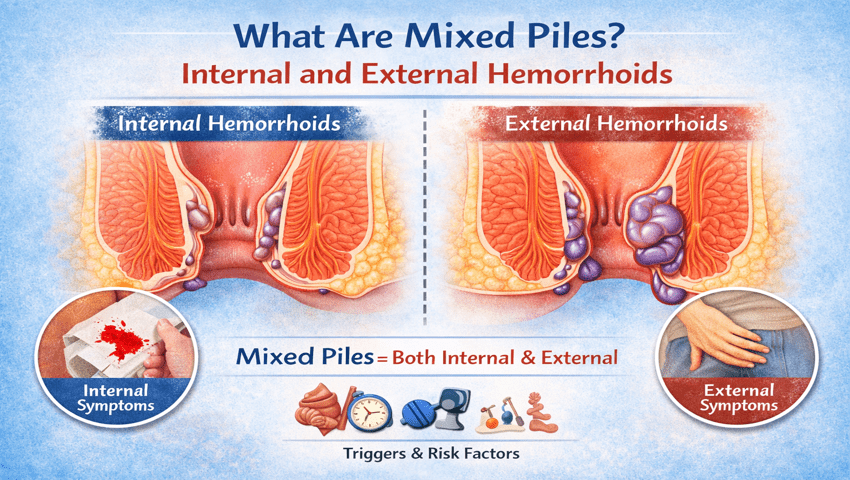
Mixed piles occur when internal hemorrhoids and external hemorrhoids develop together in the same person.
Internal piles form inside the rectum and are usually not visible from the outside. External piles, on the other hand, develop under the skin around the anus and can sometimes be felt as small lumps.
When both conditions occur at the same time, a person may experience a combination of symptoms such as bleeding during bowel movements along with pain or swelling around the anus.
Because the condition affects both internal and external veins, it is crucial to determine the exact cause and severity before selecting the appropriate treatment.
Understanding Internal vs External Hemorrhoids:
To understand mixed piles clearly, it is helpful to know the difference between internal and external hemorrhoids.
Internal Hemorrhoids:
Internal hemorrhoids develop inside the rectum, which is the last part of the large intestine before the anus.
Some common signs include:
- Bleeding During Bowel Movements: Many patients notice bright red blood on toilet paper or in the toilet bowl after passing stool. This happens because the swollen veins inside the rectum become irritated when stool passes.
- Little or No Pain: Internal piles usually do not cause much pain because the inside of the rectum has fewer pain-sensitive nerves compared to the outer skin.
- Hemorrhoid Prolapse: In more advanced stages, the swollen vein may push outside the anus during bowel movements. This condition is called prolapse and may cause discomfort or a feeling of something coming out.
External Hemorrhoids:
External hemorrhoids form under the skin around the anal opening and are easier to notice.
Common symptoms include:
- Pain and Tenderness Around the Anus: External piles can become painful, especially when sitting for long periods or during bowel movements.
- Swelling or Lump Near the Anal Area: Some people may feel a small soft lump or swelling near the anus. This swelling occurs because blood collects inside the enlarged vein.
- Itching and Skin Irritation: Inflammation in the area can irritate the surrounding skin, causing a persistent itching or burning sensation.
In some cases, a blood clot may develop inside the external hemorrhoid. This condition is known as thrombosed piles, which can cause sudden and severe pain.
Why Do Mixed Piles Develop?
Mixed piles usually develop when pressure on the rectal veins increases repeatedly over time. Several lifestyle and health factors can contribute to this pressure.
- Chronic Constipation: Constipation is one of the most common reasons for piles. When stools are hard and difficult to pass, people often strain during bowel movements. This repeated straining increases pressure on the veins in the rectum and anus, causing them to swell.
- Low Fiber Diet: Fiber helps keep stools soft and easy to pass. When a person eats very little fiber, digestion becomes slower, and stools become hard. Hard stools increase the need to push during bowel movements, which can trigger hemorrhoids.
- Sitting for Long Hours: People who sit for long periods, such as office workers or drivers, may experience increased pressure in the anal region. Sitting on the toilet for extended periods can also strain the rectal veins.
- Pregnancy: During pregnancy, the growing uterus puts pressure on the pelvic veins. Hormonal changes can also slow digestion, increasing the chances of constipation and piles.
- Excess Body Weight: Being overweight increases abdominal pressure, which can affect blood flow in the pelvic veins and contribute to hemorrhoid formation.
Symptoms of Mixed Hemorrhoids:
People with mixed piles may experience a combination of symptoms from both internal and external hemorrhoids.
Some common symptoms include:
- Rectal Bleeding: Bright red bleeding during or after bowel movements is often one of the earliest signs of hemorrhoids.
- Pain Around the Anal Area: External piles may cause pain or discomfort, especially while sitting or passing stool.
- Swelling or Lump Near the Anus: A small lump or swelling may appear near the anal opening. This lump may become more noticeable after bowel movements.
- Itching and Irritation: The skin around the anus may feel itchy due to inflammation or mucus discharge from internal hemorrhoids.
- Difficulty Sitting Comfortably: Swelling and tenderness in the anal area can make sitting uncomfortable for long periods.
If these symptoms continue for several days, it is advisable to seek medical evaluation at a specialized Proctology Clinic in Kerala.
How Are Mixed Piles Diagnosed?
Diagnosing mixed piles is usually simple and involves a few basic examinations.
Doctors may perform:
- Physical Examination: The doctor checks the anal area for visible swelling, lumps, or signs of external hemorrhoids.
- Digital Rectal Examination: A gentle examination using a gloved finger helps detect internal hemorrhoids inside the rectum.
- Proctoscopy: A small instrument called a proctoscope allows doctors to look inside the rectum and confirm internal piles.
These tests help determine the severity of the condition and guide the most appropriate treatment plan.
Treatment Options for Mixed Piles:
Treatment for mixed piles depends on the severity of the hemorrhoids and the symptoms experienced by the patient.
Lifestyle and Dietary Changes:
In mild cases, simple lifestyle improvements can help reduce symptoms.
Doctors often recommend:
- Eating fiber-rich foods such as fruits, vegetables, oats, and whole grains
- Drinking enough water throughout the day to keep stools soft
- Avoiding excessive straining during bowel movements
- Staying physically active to improve digestion
- Avoid sitting for long periods on the toilet.
These steps help reduce pressure on rectal veins and prevent piles from worsening.
Non-Surgical Treatments:
For moderate piles, doctors may suggest minimally invasive treatments.
- Rubber Band Ligation: A small rubber band is placed around the hemorrhoid to cut off its blood supply. Over time, the hemorrhoid shrinks and falls off.
- Infrared Coagulation: This procedure uses heat energy to shrink hemorrhoidal tissue and reduce bleeding.
- Injection Therapy: A special medication is injected into the hemorrhoid to shrink the swollen vein.
These treatments are quick and usually performed as outpatient procedures.
Advanced Treatment Options:
For larger or persistent hemorrhoids, modern procedures such as Laser Piles Treatment in Thrissur may be recommended. This minimally invasive technique uses focused laser energy to shrink hemorrhoidal tissue while minimizing bleeding and discomfort.
When Should You See a Doctor?
You should seek medical attention if you notice:
- Frequent bleeding during bowel movements
- Severe pain around the anus
- A persistent lump near the anal opening
- Symptoms that do not improve with home remedies
Early consultation with the Best Proctologist in Thrissur, Dr. Raviram S., can help identify the condition early and prevent complications.
Conclusion:
Mixed piles occur when both internal and external hemorrhoids develop at the same time, leading to symptoms such as bleeding, swelling, itching, and discomfort. While mild cases may improve with lifestyle changes like a high-fiber diet and proper hydration, persistent symptoms should not be ignored.
If you are experiencing signs of hemorrhoids, timely consultation can help prevent complications and provide the right treatment. At Thrissur Piles Clinic, Dr. Raviram S. offers expert evaluation and modern treatment options to help patients find lasting relief. Call 9961001199 to schedule a consultation and get the right care for your condition.
Frequently Asked Questions (FAQ's):
Yes. This condition is known as mixed piles, where both internal and external hemorrhoids occur together.
Mixed piles can cause more noticeable symptoms because they involve both internal bleeding and external swelling or pain.
Mild cases may improve with diet, lifestyle changes, and medications. However, more advanced cases may require procedures such as laser treatment.
Yes. Laser treatment is considered a modern and minimally invasive method that offers faster recovery and less pain compared to traditional surgery.