
- 25/11/2026
- Dr. Raviram
- 0 Comments
- Pilonidal Sinus
What Is the Difference Between Open and Closed Pilonidal Sinus Surgery?
Have you ever had a painful lump just above your buttock crease that settles with antibiotics and then returns a few months later? If yes, you are not alone. Many young adults, drivers, IT professionals and people with long sitting hours go through this cycle again and again, without knowing why it keeps happening.
Often, the real answer is a pilonidal sinus, and medicines alone cannot cure it. Surgery is usually needed. But here is the twist: not all surgeries are the same. The method your surgeon chooses can change your pain, your healing time and even the chance of the problem coming back.
If you are searching for Pilonidal Sinus Treatment in Thrissur, this guide will help you understand your options clearly. Dr. Raviram S., a proctologist in Thrissur with 16 years of experience at Thrissur Piles Clinic, often explains that most patients are more afraid of the unknown than of the surgery itself. So, let us remove that fear and look at open and closed pilonidal sinus surgery, step by step.
What Is Open Pilonidal Sinus Surgery?
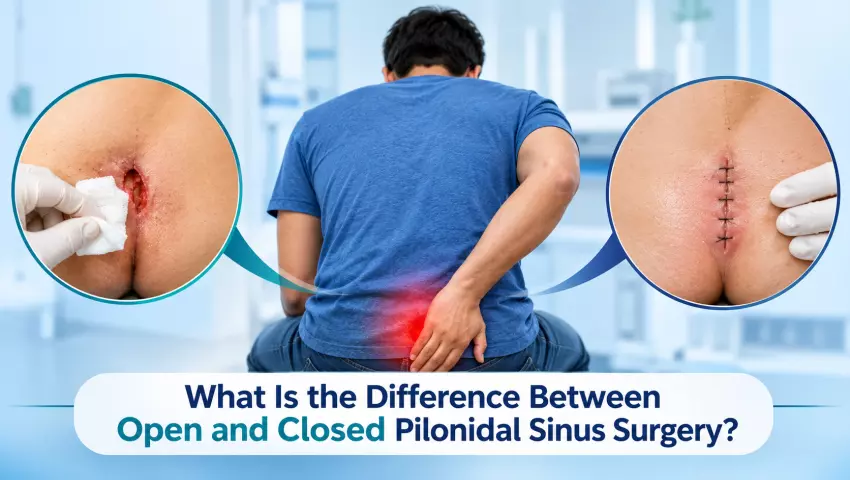
In open pilonidal sinus surgery, the surgeon removes the sinus tract, the hair and the infected tissue, and then leaves the wound partly or fully open. The wound is not stitched tightly. Instead, it is allowed to heal slowly from the inside to the outside.
This is one of the oldest and most trusted forms of pilonidal cyst surgery. It is especially useful when there is a lot of infection, pus or multiple openings.
How Is Open Pilonidal Sinus Surgery Performed?
The pilonidal sinus surgery procedure for the open method usually follows these steps:
- You are given spinal or local anaesthesia, so you do not feel pain.
- The surgeon cuts out the sinus openings and the tract below the skin.
- Hair, debris and infected tissue are cleaned out completely.
- The wound is packed with a dressing and left open.
- Daily dressing changes are done until the wound fills up with healthy tissue.
Most patients go home the same day or the next day.
What Is Closed Pilonidal Sinus Surgery?
In closed pilonidal sinus surgery, the diseased tissue is removed in the same way, but the wound is then closed with stitches. This is why it is also called closed wound pilonidal sinus surgery.
Often, the surgeon uses a flap technique, such as the Limberg flap. The cut is shaped so that the scar moves away from the deep, hair-prone natal cleft. This reduces pressure on the wound and helps it heal better.
How Is Closed Pilonidal Sinus Surgery Performed?
- Anaesthesia is given, and the area is cleaned and shaved.
- The sinus tract and infected tissue are removed completely.
- The surgeon prepares a flap or brings the skin edges together.
- The wound is closed with stitches, and a small drain may be placed.
- Stitches are removed after about 10 to 14 days.
This method needs good skin condition and no active infection, so the surgeon checks this carefully before choosing it.
Key Differences Between Open and Closed Pilonidal Sinus Surgery:
Here is a simple way to understand open vs closed pilonidal sinus surgery:
- Wound: Open surgery leaves the wound open. Closed surgery stitches it.
- Healing: Open wounds heal from inside out. Closed wounds heal by joining skin edges.
- Dressing: Open wounds need daily packing. Closed wounds need less care.
- Best for: Open is better for infected or complex cases. Closed suits clean, well-planned cases.
A skilled proctologist in Thrissur will look at your sinus size, infection and lifestyle before recommending one of these.
Recovery Time: Open vs Closed Pilonidal Sinus Surgery
Pilonidal sinus surgery recovery time is different for both methods. After closed surgery, many people return to desk work in about 1 to 2 weeks. After open surgery, the pilonidal sinus surgery recovery is slower, and you may need 2 to 4 weeks away from regular activity, depending on the wound size.
Sitting for long hours, cycling and heavy exercise should be avoided in the early days in both cases.
Wound Healing: Open vs Closed Pilonidal Sinus Surgery
This is where the biggest gap appears. The pilonidal sinus surgery healing time for a closed wound is usually 2 to 3 weeks. For an open wound pilonidal sinus surgery, complete healing may take 4 to 8 weeks, and sometimes longer for large wounds.
The pilonidal sinus surgery healing process in an open wound goes in stages: first the wound is cleaned and starts to bleed less, then new pink tissue grows, and finally the skin covers the area. It needs patience, but it is a safe and natural process.
Pain and Wound Care After Both Procedures:
Some pain is normal after both surgeries, and it is controlled with simple painkillers. Closed surgery may feel tight or pulling for a few days. Open surgery pain is usually less sharp but lasts longer because of dressings.
Good wound care helps a lot:
- Keep the area clean and dry.
- Take warm sitz baths if your doctor advises.
- Follow dressing instructions properly.
- Eat fibre-rich food and drink enough water to avoid straining.
- Remove hair around the area regularly, as advised.
Pilonidal sinus surgery complications can include infection, wound opening, bleeding or delayed healing. These are less likely when you follow your doctor’s advice and attend all follow-up visits.
Recurrence Risk: Open vs Closed Pilonidal Sinus Surgery
This is a question everyone asks. The pilonidal sinus surgery recurrence rate depends on the technique, the surgeon’s experience and your aftercare. Simple closed stitching in the midline has a higher chance of the sinus returning. Flap-based closed surgery and well-managed open surgery generally show lower recurrence.
Keeping the area hairless, maintaining hygiene and avoiding long sitting hours also reduce the risk.
Advantages and Disadvantages of Open Pilonidal Sinus Surgery:
Advantages
- Works well for infected and complex sinuses
- Lower chance of trapped infection
- Technically simple and reliable
Disadvantages
- Longer healing time
- Daily dressings are needed
- More time away from routine work
Advantages and Disadvantages of Closed Pilonidal Sinus Surgery:
Advantages
- Faster healing and early return to work
- Less dressing and wound care
- Neater scar, especially with flap methods
Disadvantages
- Higher risk of wound breakdown if infection is present
- Needs careful patient selection
- Stitches may need extra care
In selected patients, laser pilonidal sinus treatment in Thrissur is also available as a minimally invasive option. It uses a thin laser fibre to close the sinus tract with very small incisions, leading to less pain and faster recovery. It is not suitable for every case, so a proper examination is important.
Which Is Better: Open or Closed Pilonidal Sinus Surgery?
There is no single best answer. The better choice depends on your condition:
- Active infection or abscess: Open surgery is often safer.
- Clean, single sinus: Closed or flap surgery may heal faster.
- Small, recurrent or early cases: Laser pilonidal sinus treatment in Thrissur may be considered.
The right pilonidal cyst removal surgery is the one matched to your sinus, your health and your daily routine. If you are looking for Pilonidal Sinus Treatment in Thrissur, consult an experienced proctologist in Thrissur who can explain every option honestly before you decide.
Conclusion:
Open surgery heals slowly but is dependable in infected or complex cases. Closed surgery heals faster and has a smaller wound-care burden, but needs the right case selection. Both can give excellent results when done properly and followed by good aftercare.
If pilonidal pain keeps coming back, do not keep waiting and hoping it will go away. Meet Dr. Raviram S. at Thrissur Piles Clinic for a proper check-up and a clear plan. With the right Pilonidal Sinus Treatment in Thrissur, you can finally put this problem behind you and sit comfortably again.