
- 28/09/2026
- Dr. Raviram
- 0 Comments
- Fissure
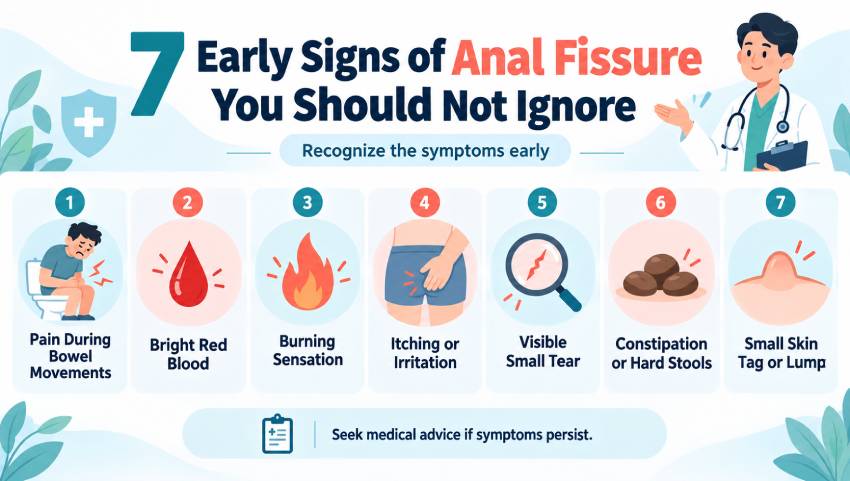
7 Early Signs of Anal Fissure You Should Not Ignore
Have you ever felt a sharp, burning pain while passing stool and then wondered why it just won’t go away? You are not alone. Most people brush it off thinking it’s “just a bad day” or piles, and by the time they finally decide to see someone, the small tear has already turned into a stubborn, chronic problem. Dr. Raviram S. says that an anal fissure, if caught early, is one of the easiest conditions to treat — but if ignored, it can turn into months of unnecessary pain.
If you are searching for genuine Fissure Treatment in Thrissur, understanding these early warning signs first can save you a lot of discomfort and worry. Keep reading, because sign number 4 is the one most people notice but completely misread.
What Is an Anal Fissure?
An anal fissure is a small tear in the skin lining the anus, usually caused by:
- Passing hard or large stool
- Long-term constipation
- Straining on the toilet
- Chronic diarrhoea or low-fibre diet
Fissures are either acute (recent, heals fast) or chronic (lasts 6+ weeks, needs a doctor’s help). Catching it early makes all the difference.
1. Sharp Pain During Bowel Movements:
The first and most obvious sign is a sudden, sharp, knife-like pain the moment you pass stool. Many people describe it as:
- A cutting or “glass-like” sensation
- A burning pain right at the anal opening
- Pain that peaks during the bowel movement itself
This pain is caused by the tear stretching open as stool passes through it. If this happens more than once, don’t ignore it — it’s your body’s clear signal that something is not right.
2. Pain That Lingers After Passing Stool:
With a fissure, the pain doesn’t stop the moment you’re done. It often shows up as:
- A deep, burning ache that lasts minutes to hours
- A throbbing sensation after wiping
- Tightness or cramping in the area
This happens because the anal muscle goes into a spasm after the tear is irritated. If your discomfort outlasts the actual bowel movement by a long margin, take it seriously — this lingering pain is often what finally pushes people to consult a Proctologist in Thrissur.
3. Blood on Toilet Paper or Stool:
Bright red blood is another classic early sign, and you may notice it in a few different ways:
- Streaks of blood on toilet paper after wiping
- A few drops of blood in the toilet bowl
- Bright red lines on the surface of the stool
Unlike dark, mixed-in blood (which can indicate something else entirely), fissure bleeding is usually fresh and bright red because the tear is close to the surface. Even a small amount of blood should never be ignored, and it’s one of the more common reasons patients finally book a consultation with a doctor.
4. A Visible Tear or Crack Near the Anus:
If you look closely (or feel while cleaning), you may notice a small crack, split, or even a tiny skin tag near the anal opening. This is the actual fissure. It might look minor, almost like a paper cut, but it can cause disproportionate pain because the area is so sensitive and constantly in use. For tears that don’t heal with home care, doctors offering the Best Laser Treatment for Fissure in Thrissur can close it up in a single, quick sitting.
5. Itching or Irritation Around the Anus:
Itching and irritation around the anus are often mistaken for something else, like:
- Hemorrhoids
- A skin allergy or reaction
- Simple dryness or sweating
But when this itching shows up along with pain during bowel movements, it’s usually the fissure healing and re-opening in a cycle, which keeps the skin irritated and slow to heal on its own — proper Fissure Treatment in Thrissur can break this cycle much faster than home remedies alone.
6. Muscle Spasms in the Anal Sphincter:
Some people feel a tight, cramping sensation in the anal area after passing stool — this is the internal sphincter muscle going into spasm. This spasm is actually part of the problem, not just a symptom, because it:
- Reduces blood flow to the fissure
- Slows down natural healing
- Makes the next bowel movement more painful
This is one of the reasons why untreated fissures often become chronic, and why chronic cases usually respond best to the Best Laser Treatment for Fissure in Thrissur, since it relaxes the spasm and heals the tear together.
7. Fear or Avoidance of Bowel Movements:
This one is easy to miss because it’s behavioural, not physical. After a painful experience, many people unconsciously:
- Delay or hold back bowel movements
- Avoid certain foods out of fear
- Feel anxious before using the toilet
Unfortunately, this makes stool harder and drier, which worsens constipation and makes the next bowel movement even more painful — a vicious cycle that only a Proctologist in Thrissur can help break with the right guidance.
When to See a Doctor in Thrissur?
You should not wait it out if:
- The pain or bleeding continues for more than a week
- You notice heavy bleeding, pus, swelling, or fever
- The fissure keeps coming back even after home care
- The pain is affecting your daily routine or sleep
At this stage, self-treatment with creams and diet changes usually isn’t enough. Consulting a Proctologist in Thrissur early can prevent the fissure from becoming chronic and needing more invasive treatment later.
How Anal Fissures Are Diagnosed at Thrissur Piles Clinic?
Diagnosis is usually simple and involves:
- A basic physical examination
- A closer look in recurring or chronic cases
- Ruling out other conditions with similar symptoms
Dr. Raviram S. and his team follow this exact approach — a quick, respectful examination followed by a clear treatment plan, without unnecessary tests or delays, making Fissure Treatment in Thrissur a straightforward and comfortable process for patients.
For patients whose fissures have become chronic or aren’t responding to home care, laser-based options are now a preferred choice, since they’re minimally invasive, have a shorter recovery time compared to traditional surgery, and allow most patients to return to their normal routine within a few days.
Conclusion:
An anal fissure might feel embarrassing to talk about, but it’s one of the most common and treatable conditions out there — especially when caught early. Don’t let shyness or the “it will heal on its own” mindset turn a small tear into a chronic problem. If you’re noticing even two or three of the signs mentioned above, it’s worth getting it checked rather than waiting it out.
For reliable, experienced, and comfortable care, Dr. Raviram S. brings 16 years of clinical experience to every patient he sees. And if your fissure has already turned chronic, the Best Laser Treatment for Fissure in Thrissur offers a quicker, more comfortable path to healing — so don’t ignore the signs, connect with our clinic today and get it checked before it gets worse. You can also call us directly at 099610 01199.