
- 13/01/2026
- Dr. Raviram
- 0 Comments
- Pilonidal Sinus
How to Prevent Pilonidal Cyst from Coming Back: Causes, Care & Long-Term Solutions
Have you treated a painful bump on your tailbone, only to feel the same pain again after a few months? If yes, you are not alone. One of the most common questions patients ask is how to prevent a pilonidal cyst from coming back.
A pilonidal cyst, also called a pilonidal sinus, is known for its high recurrence rate if proper care is not taken. Many people in Kerala and across India worry about repeated infections, surgery, and time away from work. The good news is, recurrence can be prevented with the right knowledge, daily care, and expert treatment.
At Thrissur Piles Clinic, Dr. Raviram S., a senior Proctologist in Thrissur, helps patients achieve long-term relief using expert laser treatment and personalized prevention plans. In this guide, we explain why pilonidal cyst occurs, how to stop it from returning, and the best Pilonidal Sinus Treatment in Thrissur available today.
What Is a Pilonidal Cyst and Why Does It Recur?
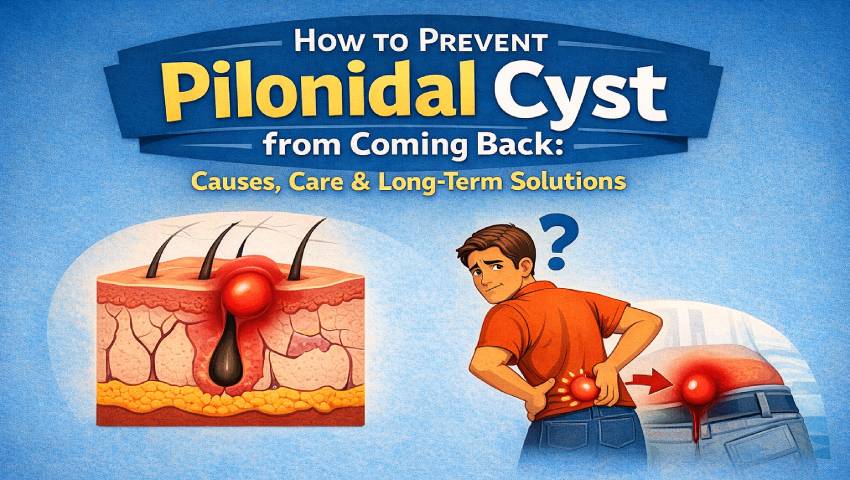
A pilonidal cyst is a small tunnel or cavity that forms in the skin at the top of the buttocks, near the tailbone (coccyx). It often contains hair, sweat, and dirt. When this area gets infected, it turns into a painful abscess filled with pus.
People often describe it as:
- A zit on the tailbone
- A tailbone bump
- A swollen lump on the buttock
Why Does Pilonidal Sinus Occur?
The main cause is loose hair. Hair gets trapped between the buttocks. Due to friction from sitting or walking, the hair pierces the skin. The body treats it as a foreign object and forms a cyst around it.
Why Does It Come Back?
Pilonidal cyst comes back when:
- Hair continues to enter the area
- The sinus tract is not fully closed
- Deep skin folds trap sweat and bacteria
- Aftercare is poor following surgery
Understanding this is the first step in learning how to prevent a pilonidal cyst from recurring.
Main Causes of Pilonidal Cyst Recurrence:
If you keep asking, “Why does my pilonidal cyst return?”, these are the most common reasons:
- Excess Body Hair: Thick or coarse hair in the buttock area is the number one cause of recurrence.
- Deep Natal Cleft: Some people naturally have a deep groove between the buttocks. This creates suction that pulls hair inside.
- Long Sitting Hours: Office workers, drivers, and students who sit for long hours put constant pressure on the tailbone.
- Sweat and Moisture: Kerala’s humid climate increases sweating. Moist skin becomes soft and easy for hair to penetrate.
- Overweight: Extra weight deepens the cleft and increases friction.
Early Warning Signs a Pilonidal Cyst Is Returning:
Early detection helps avoid serious infection. Watch for:
- Mild pain while sitting
- A small pimple-like bump near the tailbone
- Redness or warmth in the area
- Clear fluid, blood, or pus discharge
- Bad smell from the wound area
If you notice these signs, consult Dr. Raviram S. Pilonidal Sinus Doctor in Thrissur without delay.
How to Prevent Pilonidal Cysts from Coming Back Naturally?
Many patients ask, “Is pilonidal sinus curable without surgery?”
While surgery removes the sinus, natural care plays a big role in prevention.
1. Keep the Area Hair-Free:
This is the most important step.
- Shaving once a week (carefully)
- Hair removal creams
- Laser hair reduction (best long-term option)
Laser hair removal greatly reduces recurrence risk.
2. Maintain Proper Hygiene:
Wash the area daily with mild soap. After bathing, dry the area fully. Moisture invites infection.
3. Avoid Prolonged Sitting:
Stand and walk every 30–60 minutes. Use a coccyx cushion to reduce tailbone pressure.
4. Wear Loose, Breathable Clothes:
Avoid tight jeans and synthetic underwear. Cotton clothing reduces sweat and friction.
Long-Term Care After Pilonidal Cyst Surgery:
Many recurrences happen due to poor post-surgery care.
- Follow wound care instructions strictly
- Change dressings as advised
- Avoid strain and heavy activity initially
- Eat fibre-rich foods to avoid constipation
- Attend all follow-up visits
Our Pilonidal Sinus Specialist in Thrissur, Kerala, Dr. Raviram S., will guide you through healing.
How to Prevent Pilonidal Cyst from Returning After Surgery?
Surgery removes the problem, but prevention keeps it away.
- Laser hair removal after healing
- Maintain healthy weight
- Check the area monthly for pits or redness
- Continue hygiene and sitting precautions
- Patients who follow these steps rarely face recurrence.
Best Medical Options to Prevent Recurrence:
Modern treatments give much better results than old open surgeries, with less pain and faster recovery.
- Laser Treatment for Pilonidal Sinus: At Thrissur Piles Clinic, Raviram S., a trusted proctologist, uses advanced laser procedures to reduce pain and prevent recurrence.
- Laser Ablation (1470-nm Diode Laser): The gold-standard treatment. The laser closes the sinus from the inside without big cuts. Recovery is quick (about 2 weeks), and recurrence is very low (2.9–3.8%).
- FiLaC (Laser Closure Technique): A fine laser fibre seals the tract safely. Success rate is over 95% with minimal scarring.
- LIFT Procedure: Protects bowel muscles. Healing takes around 5 weeks with good results in selected cases.
- Off-Midline Closure Surgery: Best for complex or repeated cases. Recurrence is very low compared to the old methods.
- Wide Excision (Open Surgery): An older option with longer healing time and higher recurrence. Used only when needed.
Home Care vs Medical Prevention – What Actually Works?
Common Myths About Preventing Pilonidal Cyst Recurrence:
Myth: Antibiotics cure pilonidal sinus
Fact: They only control infection, not the sinus
Myth: Only men get pilonidal cysts
Fact: Women also suffer, though less commonly
Myth: Sitting on hot surfaces causes it
Fact: Hair and friction cause it, not heat alone
When to See a Doctor for Recurrent Pilonidal Cyst?
Consult a Proctologist doctor in Thrissur if:
- Pain increases
- Pus or blood appears
- Fever develops
- Sitting becomes difficult
Early treatment is simpler and more affordable.
Professional Care: Dr. Raviram S at Thrissur Piles Clinic:
For pilonidal sinus prevention, treatment, or recurrence management, Dr. Raviram S at Thrissur Piles Clinic offers India’s most advanced solutions. With 15+ years of proctology expertise, Dr. Raviram S specializes in:
- Laser Pilonidal Sinus Surgery – minimally invasive, same-day discharge, 2.9% recurrence
- FiLaC Treatment – precise laser closure, 95%+ success
- RAR-HAL Method – advanced technique for complex cases
- Comprehensive aftercare – ensuring permanent relief
Thrissur Piles Clinic combines cutting-edge technology with compassionate patient care. Whether seeking prevention guidance, initial treatment, or recurrence management, Dr. Raviram S provides personalized solutions with minimal discomfort and rapid recovery.
Ready to live pain-free? If you notice a lump or are searching for experienced Pilonidal Sinus Surgeons in Thrissur, don’t delay. Early treatment is simple and affordable. Call us today at 9961001199 Thrissur Piles Clinic to consult with Dr. Raviram S—your partner in pilonidal sinus prevention and lasting recovery.
FAQS: How to Prevent Pilonidal Cyst
To prevent recurrence, keep the tailbone area hair-free using laser hair removal or shaving, maintain strict hygiene, and avoid sitting for long periods.
Early stages can be managed with hygiene and creams, but surgery is usually required to permanently close the sinus tract and prevent the cyst from coming back.
A pilonidal cyst may burst and drain pus naturally, providing relief, but the underlying sinus tract remains and will likely refill unless treated medically.
Dr. Raviram S. at Thrissur Piles Clinic recommends advanced Laser Treatment (SiLaC) or Flap Surgery for the most effective, long-term prevention of recurrence.
Dr. Raviram S. at Thrissur Piles Clinic is a highly recommended specialist for Pilonidal Sinus Treatment in Thrissur. He is an experienced Proctologist known for using advanced, painless Laser techniques to treat cysts effectively and ensure they do not come back.