

- 09/02/2024
- Dr. Raviram
- 0 Comments
- Piles
Living with Piles: Tips for Managing Pain and Discomfort
Living with piles can be incredibly frustrating, uncomfortable, and painful. Whether you are dealing with a mild case or severe flare-ups, the impact on your daily life is undeniable. Also known in medical terms as hemorrhoidal disease (or bawaseer in English meaning, and mulvyadh in regional terms), piles affect millions of people. But you don’t have to suffer in silence.
This guide, featuring expert insights aligned with top proctology care standards—such as those practiced by Dr. Raviram S. at the Thrissur Piles Clinic—will walk you through practical, effective ways to manage and treat this condition. From Indian home remedy piles solutions to understanding when to see a Proctologist in Thrissur, here is everything you need to know about piles problems and solutions.
What Does Living with Piles Really Mean?
When people ask, “What are piles?” they are referring to swollen and inflamed blood vessels in the rectum and anus. To understand what piles look like, imagine small, swollen bumps or a pea-sized lump near the anus.
There are generally two types:
- Internal Piles: These occur inside the lower rectum. They are usually painless but can cause bleeding.
- External Piles: These form under the skin around the anus (piles in the bum hole). External and internal piles can both cause significant distress, but external ones are typically more painful because that area is highly sensitive.
Living with piles means navigating daily activities—like sitting, walking, or using the toilet—with caution to avoid triggering pain or bleeding.
Common Symptoms That Cause Discomfort
The symptoms of piles and hemorrhoids can vary depending on the piles stages (from stage 1 piles to stage 3 piles). Common signs include:
- A painful lump near the anus (often a hard lump under the skin near the anus).
- Itching, redness, and swelling around the bum area.
- Bright red piles blood colour on toilet paper or in the toilet bowl (piles blood stool).
- A feeling that the bowels haven’t emptied completely.
Are there differences between men and women? While the base symptoms are the same, the causes can differ. Symptoms of piles in ladies often flare up during pregnancy or after childbirth due to increased pelvic pressure. Piles in men often relate to heavy lifting, chronic constipation, or sitting for long hours. Regardless of gender, lumps around the anus should never be ignored.
Why Do Piles Become Painful?
Why do piles happen, and why do they hurt so much suddenly? Pain usually spikes due to a condition called a thrombosed hemorrhoid. This happens when a blood clot forms inside an external hemorrhoid, turning it into a hard, highly painful lump near the anus.
How to Manage Piles Pain at Home
If you are wondering how to reduce piles naturally and get instant relief for hemorrhoids, start with these proven piles home remedies for pain:
- Sitz Baths: Soak the anal area in plain warm water for 10 to 15 minutes, two to three times a day. This is one of the best ways how to ease pile pains.
- Ice Packs: Applying an ice pack on hemorrhoids can numb the area and reduce swelling quickly.
- Topical Creams: Over-the-counter hemorrhoids relief cream or ointments can soothe itching and irritation.
- Over-the-counter Pain Relief: If you need a painkiller for piles, standard oral medications like ibuprofen can help manage the discomfort of a painful lump.
Note: While many search for a “piles cure in 3 days cream,” true healing takes time and consistency.
Diet Changes That Help Control Piles
The most effective way how to prevent piles pain is through your diet. Piles home remedies eat plans should heavily focus on softening your stool.
- What to Eat: Load up on high-fiber foods. Think whole grains, fresh fruits (like papaya and apples), vegetables, and legumes. Drink plenty of water—at least 8–10 glasses a day.
- What to Avoid in Piles: Stay away from spicy foods, heavy red meat, processed fast food, and excessive caffeine or alcohol, as these can irritate the digestive tract and cause hard stools.
Daily Habits That Make Living with Piles Easier
Knowing how to control piles naturally involves changing your bathroom habits:
- Don’t Delay: Go to the toilet as soon as you feel the urge. Waiting can dry out the stool.
- Don’t Strain: Let it happen naturally. If it doesn’t, don’t force it.
- Use a Stool: Elevating your feet on a small stool while on the toilet changes the angle of your rectum, making it easier to pass stool without straining.
- Keep it Clean: Avoid dry, rough toilet paper. Use wet wipes (alcohol and fragrance-free) or a bidet to clean the area gently.
Exercise and Piles – What Is Safe?
Exercise and piles have a tricky relationship. Moderate aerobic exercises like brisk walking, swimming, or light yoga are excellent because they stimulate bowel function and help you lose excess weight.
However, if you have outer piles or a painful lump, avoid heavy weightlifting (especially squats) or intense cycling, as these put immense pressure on your lower body and can worsen the piles disease and treatment process.
How to Stop Bleeding Piles?
Piles with blood treatment at home starts with not panicking—bright red blood is common. To stop bleeding hemorrhoids:
- Apply a cold compress to constrict the blood vessels.
- Use a soothing, medicated witch hazel pad.
- Ensure your stool is very soft to prevent further tearing of the piles on the anus. If the bleeding is heavy, dark, or doesn’t stop, it is no longer a home-treatment scenario—you need a doctor immediately.
When Home Remedies Are Not Enough
Can piles go away on their own? Mild cases often do within a week or two. But if you are asking “is piles dangerous?”, it can be if left untreated to the point of severe bleeding, anemia, or infection.
When home remedies for treating piles fail, it’s time to seek a specialist. If you are looking for the Best Piles Surgeon in Thrissur or the Best Piles Clinic in Thrissur, you want a dedicated Proctologist doctor.
Modern medicine offers excellent treatments for piles without operation, such as rubber band ligation. For more advanced stages, Laser Piles Treatment in Thrissur (or Laser Piles Surgery) is considered the better treatment for piles. It is often a painless piles treatment compared to traditional surgery, offering a faster recovery time and minimal bleeding.
Emotional Impact of Living with Piles:
It is completely normal to feel embarrassed about female hemorrhoids, male piles, or having to search for an “anus doctor near me.” The stigma around bum hemorrhoids makes people suffer silently. Remember that piles are incredibly common—it is a mechanical issue of the human body, not a reflection of your hygiene or character. Seeking help from a compassionate Proctology Clinic is a brave and necessary step toward comfort.
How Long Do Piles Last? Can They Go Away on Their Own?
Will hemorrhoids go away? Yes, first stage piles treatment often just requires diet changes, and flare-ups may resolve in a few days to a week. However, if you have a thrombosed external hemorrhoid or stage 3 piles (where the pile prolapses and has to be pushed back in), it can last longer and will likely require medical intervention to completely heal.
Long-Term Prevention Strategy to Avoid Recurrence
How to prevent from piles coming back? Prevention from piles relies on lifelong habits:
- Maintain a high-fiber diet permanently.
- Stay thoroughly hydrated.
- Exercise regularly to keep bowel movements regular.
- Take breaks from sitting—if you work at a desk, stand up every hour.
Final Thoughts – Managing Piles the Right Way
Living with piles is a challenge, but it is highly treatable. From Indian home remedies for piles to advanced laser piles surgery, you have options. Focus on softening your stool, practicing good bathroom habits, and using safe home remedies to ease the pain. However, if your symptoms persist, don’t hesitate to seek professional help. Consulting experts like Dr. Raviram S. at a specialized Thrissur Piles Clinic ensures you get the right diagnosis and the most effective, painless treatment possible.
Frequently Asked Questions: Living with Piles
For instant relief for hemorrhoids, take a warm sitz bath for 15 minutes, apply an ice pack on hemorrhoids, and use an over-the-counter hemorrhoids relief cream. If the discomfort is severe, taking a standard painkiller for piles or prescribed piles pain killer tablets can quickly help you figure out how to ease pile pains.
Yes, living with piles is entirely manageable if you adopt proper piles management habits, such as eating a high-fiber diet to ensure your piles soft stool passes easily. By taking daily piles precautions and using natural remedies piles, you can effectively control symptoms of piles and hemorrhoids and enjoy a normal, active life.
To reduce pressure on outer piles or a painful lump near the anus, try sleeping on your stomach or on your side with a pillow tucked between your knees. Taking a warm bath before bed and applying a soothing piles home made treatment or ointment can also help how to reduce piles discomfort for a restful night.
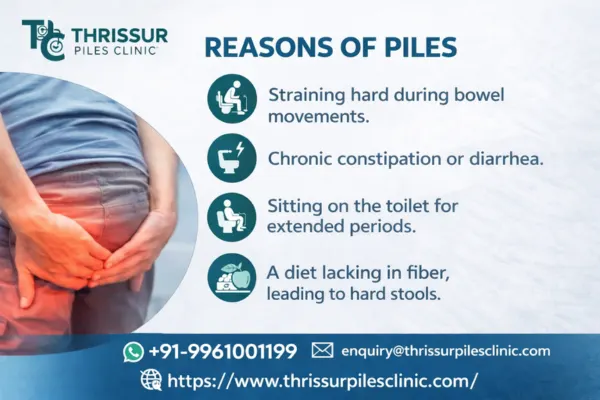
Wondering what to avoid in piles? Steer clear of spicy foods, processed meats, and low-fiber diets that cause constipation, which is a primary piles reason. Additionally, avoid sitting on the toilet for extended periods and never strain during a bowel movement, as this worsens external and internal piles.
Yes, moderate exercise and piles management go hand-in-hand; a brisk daily walk improves blood circulation and stimulates healthy bowel regularity. This approach helps how to reduce piles naturally and acts as excellent prevention from piles, without straining your lower body like heavy lifting would.
You should see an anus doctor near me if you experience severe piles blood stool, intense pain from a thrombosed hemorrhoid, or if piles home treatment in india isn’t working. For advanced care, consult Dr. Raviram S. at the Thrissur Piles Clinic, recognized as the Best Piles Surgeon in Thrissur for effective, painless laser piles treatment.